



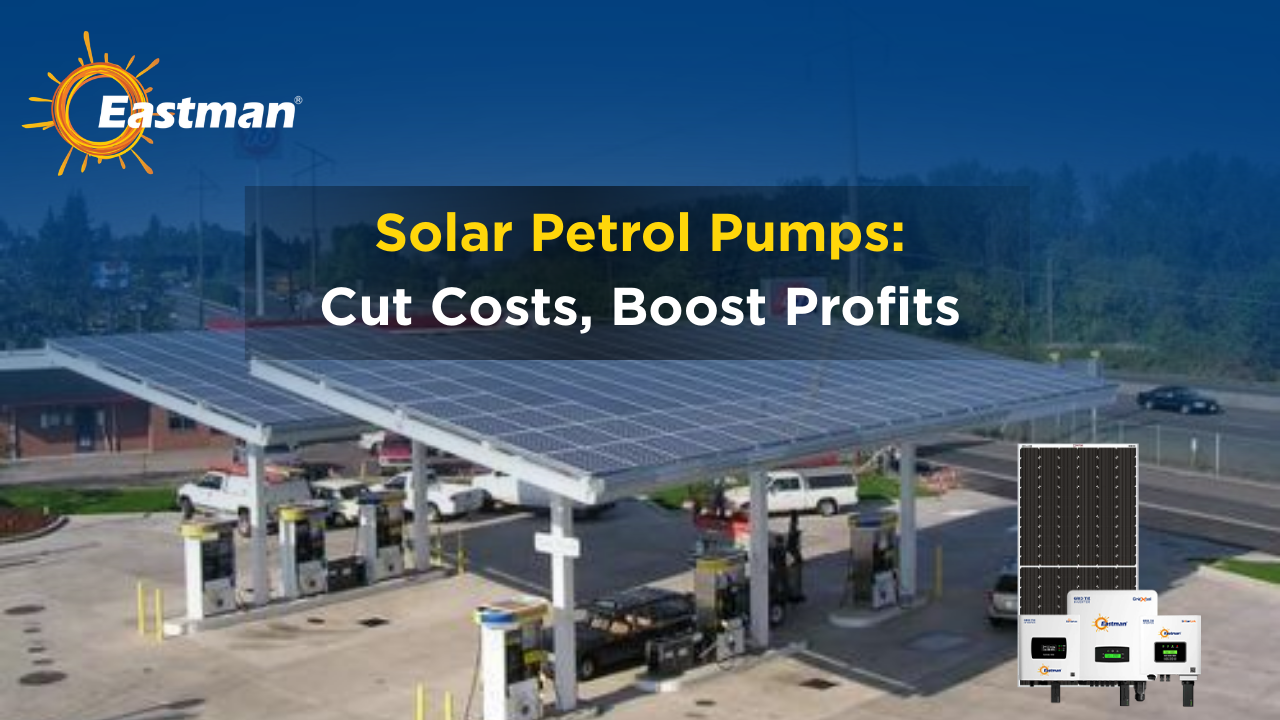
Solar Petrol Pumps: Cut Costs, Boost Profits
 February 23, 2026 / Solar Panel
 Electricity consumption is one of the highest recurring operational costs for petrol pumps in India. From fuel dispensing units and lighting to air compressors, CCTV systems, and office equipment, fuel stations operate almost 24/7.
With rising commercial electricity tariffs across states, many petrol pump owners are now exploring solar for petrol pumps in India.
However, before installing a solar system for a fuel station, it is important to understand:
1. Regulatory rules
2. Compliance requirements
3. Cost structure
4. Savings potential
5. ROI timeline
Let’s break it down clearly.
Why Petrol Pumps are Ideal for Solar Installation?
Petrol pumps are particularly suitable for solar installation because:
1. They have large canopy rooftops
2. They operate during daylight hours
3. They have a consistent electricity demand
4. They face high commercial tariff rates
5. They require an uninterrupted power supply
A typical petrol pump draws 15–40 kW of load, depending on its size and the services it offers.
This makes solar power for fuel stations both practical and financially attractive.
Electricity Consumption at Petrol Pumps
Major electricity usage areas include:
1. Fuel dispensing pumps
2. LED canopy lighting
3. Digital signage
4. Office air-conditioning
5. Air and water compressors
6. CCTV and security systems
With commercial tariffs ranging from ₹7 to ₹12 per unit in many states, monthly electricity bills can reach ₹80,000 to ₹2,50,000 or more.
This is where solar installation for fuel stations can significantly reduce operating costs.
Rules & Compliance of Solar for Petrol Pumps in India
Before installing solar, petrol pump owners must check the following:
A. DISCOM Approval
Commercial rooftop solar installations require:
1. Net metering approval
2. Load assessment
3. Grid compatibility clearance
B. Net Metering Regulations
Most states allow net metering for commercial establishments, subject to capacity limits.
Net metering allows:
1. Excess solar generation to be exported to the grid
2. Credit adjustment in electricity bills
C. Safety & Structural Clearance
Petrol pumps must ensure:
1. Structural stability of the canopy
2. Fire safety compliance
3. Electrical isolation standards
4. Proper earthing and surge protection
D. Oil Company Guidelines
For pumps operated under:
1. HPCL
2. BPCL
3. IOCL
There may be additional internal approval requirements before installation. Always verify brand-specific guidelines before proceeding.
Petrol Pumps Solar System Cost in India
The cost depends on:
1. System size (20 kW, 30 kW, 50 kW, etc.)
2. Panel type
3. Inverter type
4. Mounting structure design
5. State-specific policies
The approximate commercial rooftop solar cost is: ₹45,000 – ₹60,000 per kW
For example: A 30-kW system may cost approximately ₹13–18 lakh, depending on configuration and location.
Solar ROI for Petrol Pumps-
Let’s assume:
A. 30 kW system
B. Average generation: 120 units per day
C. Commercial tariff: ₹9 per unit
Estimated monthly savings: ₹32,000 – ₹40,000
Estimated annual savings: ₹4–5 lakh
Estimated commercial solar payback period in India: 3–4 years
After payback, electricity savings directly improve profitability. Over 25 years, total savings can be substantial.
Benefits of Solar Power for Petrol Pumps
1. Reduced Operating Costs: Lower electricity bills improve net margins.
2. Stable Energy Costs: Protection from rising tariff rates.
3. Enhanced Brand Image: Promotes green and sustainable branding.
4. Faster Payback: Commercial systems typically recover investment faster than residential systems.
5. High Daytime Consumption Match: Solar generation aligns well with operational hours.
3-Phase Solar System for Backup at petrol Pumps
Most fuel stations operate on a 3-phase power supply.
Therefore, installation requires:
1. 3-phase solar system compatible inverters
2. Proper load balancing
3. Surge protection
4. Compliance with commercial grid standards
Professional system design is essential for safety and performance.
Hybrid Solar Systems for Backup at Petrol Pumps-
In areas with frequent power cuts, fuel dispensing operations must continue without interruption.
A hybrid solar system with battery storage can:
1. Ensure uninterrupted operations
2. Prevent sales disruptions
3. Protect electronic dispensing units
However, most pumps opt for grid-connected systems with net metering for cost efficiency.
Is there any Solar Subsidy for Commercial Petrol Pumps?
Currently, central government subsidy schemes like PM Surya Ghar primarily target residential rooftop solar installations.
Commercial projects typically:
1. Do not receive direct subsidies
2. May benefit from accelerated depreciation (for businesses)
3. May qualify for state-specific incentives
Consult local policies for updated and accurate information.
Long-Term Savings Outlook-
Over 20–25 years:
1. Electricity cost savings can exceed several multiples of the initial investment
2. Operational margins improve
3. Business value increases
4. Carbon footprint reduces
For petrol pump owners looking to stabilize energy expenses, solar is becoming a strategic business decision.
Eastman Solar Solutions for Commercial Applications
Eastman is a Made-in-India, one-stop solar solution provider for commercial and industrial applications, including fuel stations. Eastman manufactures:
A. High-efficiency Solar Panels
1. ALMM-approved modules
2. Mono PERC & Topcon technology
3. Up to 27-year performance warranty
4. Built for Indian climate conditions
5. In house manufacturing facility of 800 MW
B. Robust Commercial Inverters (Grid-Tie & Hybrid)
1. 3kW to 110kW capacity range
2. 10-year warranty
3. IP65 protection
4. Type-II SPD (AC & DC side)
5. Zero export functionality
6. Designed for 3-phase commercial supply
C. Advanced LiFePO4 Lithium Solar Batteries
1. 6000+ cycle life (rated conditions)
2. Intelligent BMS integration
3. Wall-mount, floor-mount & rack-type options
4. Thermal & electrical protections
5. Reliable backup for uninterrupted fuel dispensing
Eastman systems are engineered to deliver reliable savings from commercial solar systems across diverse operating environments.
Conclusion
Installing solar for petrol pumps in India offers:
1. Significant electricity savings
2. A 3–4-year payback period
3. Protection from rising tariffs
4. Improved brand image
5. Long-term financial stability
With proper compliance, net metering approval, and quality system design, petrol pumps can convert unused rooftop space into a high-return energy asset.
As commercial solar adoption grows across India, fuel stations stand among the most suitable and profitable segments for rooftop solar installations.
Contact Eastman for more information.
Explore Eastman Solar panels Solutions.
Get to know your nearest Store Locator for convenience.
FAQ’s
Q1. Is solar allowed for petrol pumps in India?
Yes. Petrol pumps can install rooftop solar systems subject to DISCOM approval and compliance with safety regulations.
Q2. What is the average solar system size for a petrol pump?
Most petrol pumps install systems between 20 kW and 50 kW, depending on electricity consumption.
Q3. How much can a petrol pump save with solar?
Savings depend on system size and tariff, but many pumps recover investment within 3–4 years.
Q4. Is a subsidy available for commercial solar projects?
Central government subsidies are mainly for residential projects. Commercial establishments may benefit from depreciation benefits instead.
Q5. Do oil companies allow solar installation at fuel stations?
Yes, but internal approvals from HPCL, BPCL, or IOCL may be required before installation.
Q6. Is net metering available for petrol pumps?
Yes, in most states, commercial establishments can avail of net metering, subject to capacity limits.
Q7. Can petrol pumps install a battery backup with solar?
Yes. Hybrid solar systems with battery storage can ensure uninterrupted operations during power cuts.
 78728 78728