



 January 6, 2026 / Solar Inverters
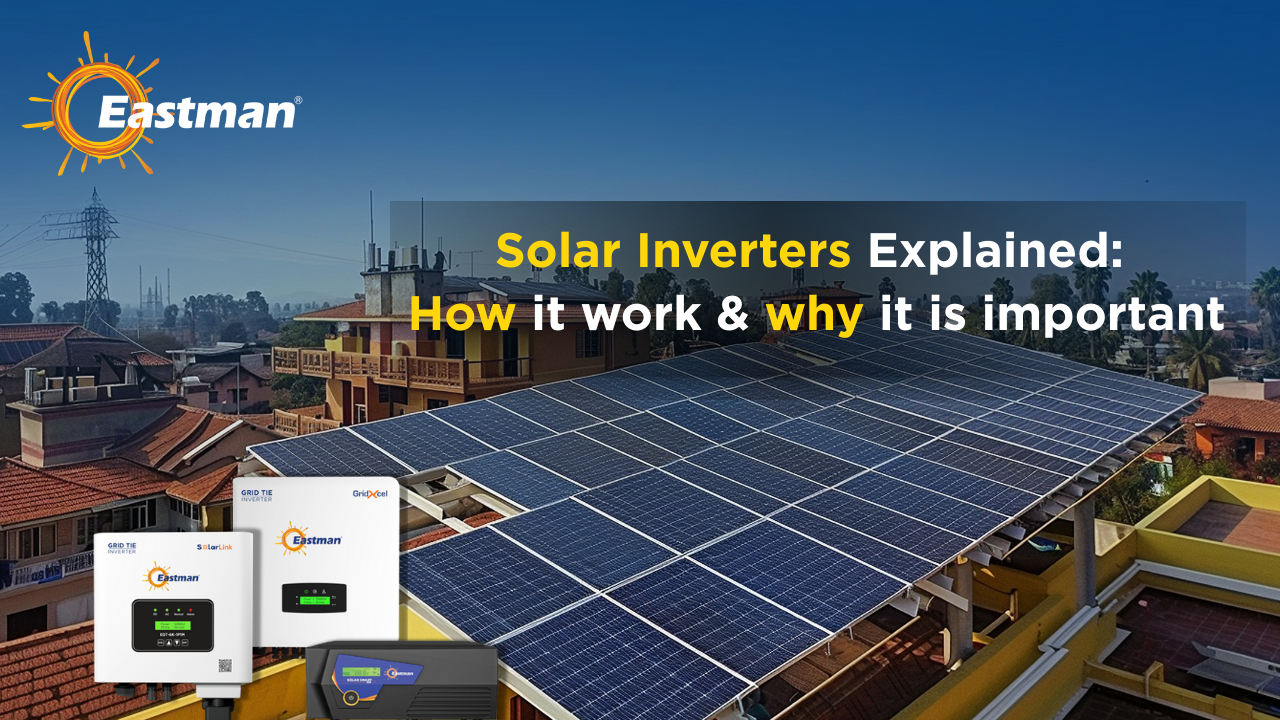
 Solar inverter explained: How it works & why it is important
As the world accelerates toward clean and sustainable energy, solar power systems have become a cornerstone of modern electricity generation. While solar panels often get most of the attention, there’s another component that quietly does the heavy lift behind the scenes: the solar inverter.
In fact, without a solar inverter, your solar panels are practically useless. Whether you’re a homeowner considering rooftop solar, a business planning large-scale installations, or simply researching the top solar brands, understanding solar inverters is essential. In this guide, we’ll break down how solar inverters work, why they are critical, the different types available, and how choosing the right inverter impacts performance, safety, and long-term savings.
What is a Solar Inverter?
A solar inverter is the heart and brain of a solar power system. Its primary job is to convert electricity generated by solar panels into a usable form for your home, business, or electrical grid.
The Simple Explanation
1. Solar panels generate Direct Current (DC) electricity.
2. Homes and appliances run on Alternating Current (AC) electricity.
3. The solar inverter converts DC to AC, making solar energy usable.
But modern solar inverters do far more than just conversion; they manage system performance, monitor energy production, ensure safety, and optimize efficiency.
How Solar Inverter Work
Understanding how a solar inverter works helps explain why quality matters.
1. DC Electricity Generation: When sunlight hits solar panels, photovoltaic (PV) cells generate DC electricity.
2. DC to AC Conversion: The inverter uses advanced electronic circuits and switching components to convert DC into AC power that matches your local grid voltage and frequency.
3. Power Optimization: High-quality inverters continuously adjust voltage and current to extract the maximum possible power from your solar panels, even during cloudy weather or partial shading.
4. Grid Synchronization: Grid-connected solar inverters synchronize the AC output with the utility grid, ensuring safe power export and seamless energy flow.
5. Monitoring & Protection: Modern inverters track performance, detect faults, shut down automatically during grid outages, and protect your system from surges or overheating.
Without a reliable inverter, even the best solar panels can underperform.
Why Solar Inverters are Important?
Solar inverters play a much bigger role than most people realize. This is why solar, and battery brands invest heavily in inverter technology.
1. System Efficiency: A high-efficiency inverter ensures you get maximum usable energy from your panels, directly impacting savings and ROI.
2. System Safety: Solar Inverters include critical safety features such as: Anti-islanding protection, overvoltage and surge protection, and ground fault detection. These protect both your property and utility workers.
3. Energy Monitoring & Control: Most modern solar inverters come with smart monitoring systems, allowing users to track production, consumption, and system health in real time.
4. Long-Term Reliability: Since inverters operate continuously, choosing a durable and well-engineered inverter determines how long your solar system performs optimally.
Solar Inverter Configuration Explained
Solar power systems are commonly classified based on how they connect to the utility grid and manage energy storage. The three main configurations are On-Grid, Off-Grid, and Hybrid solar systems. Each configuration serves different energy needs, budgets, and reliability goals.
On-Grid Solar Inverter: An on-grid solar system is directly connected to the local utility grid and does not rely on battery storage.
How the Inverter Works in an On-Grid System:
1. Converts DC power from solar panels into AC power
2. Synchronizes with the utility grid
3. Supplies power to the home or exports excess energy to the grid
4. Automatically shuts down during grid outages for safety (anti-islanding)
Key Components:
1. Solar panels
2. Grid-tied inverter
3. Net meter
Advantages:
1. Lowest upfront cost
2. High efficiency
3. Reduced electricity bills
Limitations:
1. No backup power during outages
2. Depends on grid availability
Best For: Homes and businesses with reliable grid access and net-metering benefits.
Off-Grid Solar Inverter: An off-grid solar system operates completely independent of the utility grid.
How the Inverter Works in an Off-Grid System:
1. Manages energy from solar panels and batteries
2. Converts stored DC energy into AC power for continuous use
3. Regulates battery charging and discharging
4. Often integrates with a backup generator
Key Components:
1. Solar panels
2. Battery bank
3. Off-grid inverter
4. Charge controller
Advantages:
1. Full energy independence
2. Works without utility grid
3. Ideal for remote areas
Limitations:
1. Higher upfront cost
2. Requires careful system sizing
3. Battery maintenance and replacement
Best For: Remote locations, rural homes, or areas with unreliable grid power.
Hybrid Solar Inverter: A hybrid solar system combines grid connectivity with battery storage, offering flexibility and backup power.
How the Inverter Works in a Hybrid System:
1. Converts solar DC to AC for real-time usage
2. Charges batteries with excess solar energy
3. Exports surplus power to the grid
4. Supplies backup power during outages
Key Components:
1. Solar panels
2. Hybrid inverter
3. Battery storage
4. Grid connection
Advantages:
1. Backup power during outages
2. Better energy self-consumption
3. Reduced grid dependence
Limitations:
1. Higher cost than on-grid systems
2. Battery ROI varies by usage
Best For: Homes want energy security, backup power, and long-term flexibility.
Why Eastman stands out in Solar Inverter Technology
Eastman has built a reputation for delivering robust, efficient, and future-ready solar inverters across residential, commercial, and industrial markets.
Eastman Inverters are manufactured in 4 facilities dedicated to power electronics. These inverters are made in India with “Backward Integration” for critical components.
What sets Eastman inverters apart:
1. 10 Years Warranty
2. Low Startup DC Voltage
3. Max. DC Overloading 30%
4. Built-in Zero Export Function
5. IP65 Enclosure
6. Easy Installation with Low Maintenance
7. Type-II SPD Enabled (AC & DC Side)
8. Smart monitoring and safety features through Eastman one app
This commitment is why Eastman continues to gain recognition among trusted solar inverters and battery brands worldwide.
Conclusion
Solar panels may capture sunlight, but solar inverters transform that energy into real, usable power. Choosing the right inverter determines how efficiently, safely, and reliably your solar system performs for years to come.
As solar adoption grows, informed buyers are increasingly looking beyond panels and focusing on inverter quality, battery compatibility, and long-term value. This shift is why companies like Eastman are emerging as trusted names among the world’s leading solar and battery brands.
Ready to power your future with reliable solar technology?
Discover high-performance solar inverters and energy storage solutions by Eastman Trusted globally for quality, efficiency, and innovation
Contact Eastman for more information.
Explore Eastman Off-Grid Solutions.
Explore Eastman On-Grid Solutions.
Explore Eastman Hybrid Solutions.
Get to know your nearest Store Locator for convenience.
FAQ’s
Q. How long does an Eastman solar inverter last?
A. Eastman solar inverters come with an expected lifespan of 10–15 years, with a warranty of 10 years.
Q. Can I upgrade my inverter later?
A. Yes. Many homeowners upgrade to hybrid inverters when adding battery storage to existing solar systems.
Q. Do solar inverters work during power outages?
A. Grid-tied inverters shut down during outages for safety. Hybrid or battery-backed systems can provide backup power.
Q. What size inverter do I need?
A. Inverter size depends on your solar panel capacity, energy usage, and system design. Oversizing or under sizing can impact performance.
Q. Can I Remote Monitor my Solar System?
A. Yes, you can easily remotely monitor your system with the help of the Eastman One App.
 78728 78728