



 December 31, 2025 / Solar Panel
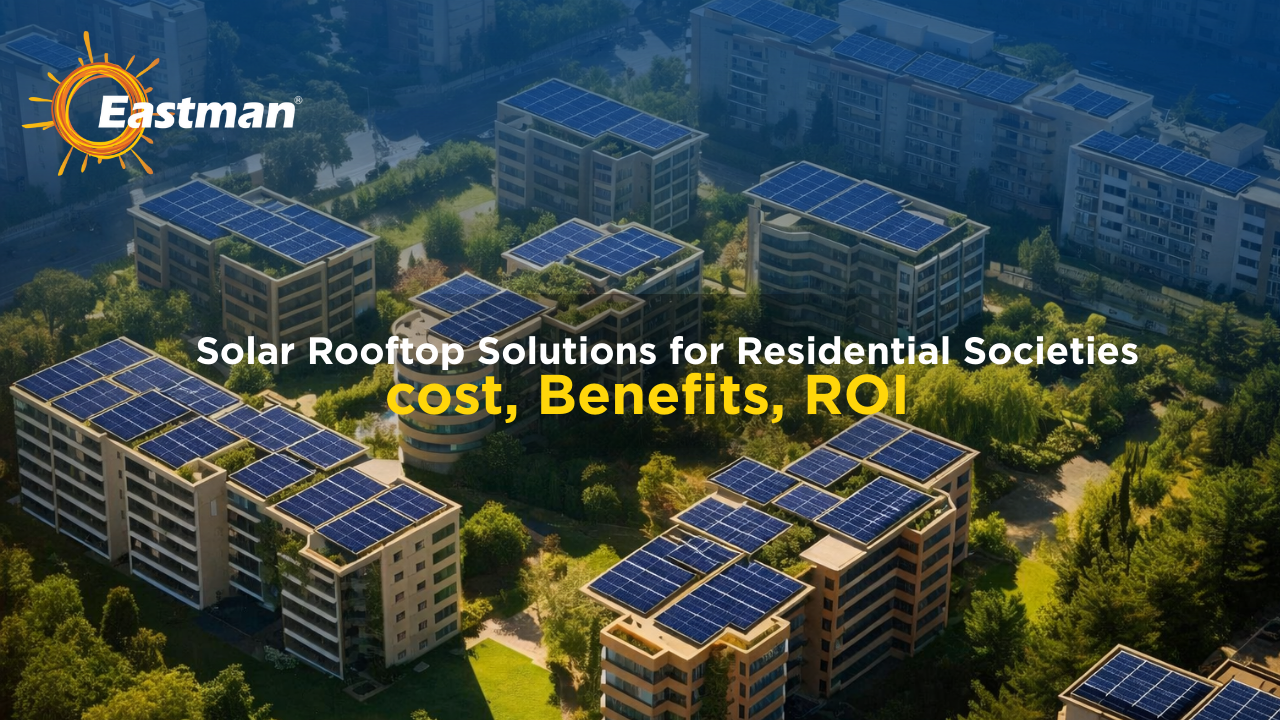
 End to End Solar Rooftop Solutions for Residential Societies: cost, Benefits, ROI
Imagine a future where your residential society generates its own power, slashes electricity bills by up to 90%, and contributes significantly to a greener planet. It sounds idealistic, but for thousands of residential complexes across the globe, this is already a reality. As energy demands rise and utility costs fluctuate, finding a sustainable and cost-effective energy solution has moved from being a luxury to a necessity.
Solar rooftop solutions offer a compelling path forward. By utilizing the often-unused space on building terraces, residential societies can transform idle concrete into power-generating assets. This shift isn't just about environmental responsibility, though reducing your carbon footprint is a noble and necessary goal. It is equally about financial prudence, energy independence, and securing a stable future for all residents.
In this comprehensive guide, we will explore end-to-end solar rooftop solutions tailored to residential societies. We will break down the mechanics of the systems, analyze the real-world costs and return on investment (ROI), and guide you through the installation and maintenance processes. Whether you are a committee member looking to propose a new project or a resident interested in sustainable living, this article provides the clarity you need to make an informed decision.
Understanding End-to-End Solar Rooftop Solutions
Before diving into the financial benefits, it is crucial to understand what a solar rooftop system entails and how it functions within a residential context. A solar rooftop system consists of solar panels installed on the roof of a building; be it a residential complex, commercial establishment, or institution, to convert sunlight into electricity.
Key Components of an End-to-End Service:
1. Site Assessment and Feasibility: Engineers analyze the roof structure, shadow-free area availability, and current energy consumption patterns.
2. System Design and Engineering: A customized blueprint is created to maximize energy generation based on the building’s orientation.
3. Procurement: Sourcing high-quality components, including photovoltaic (PV) panels, inverters, and mounting structures.
4. Installation and Commissioning: The physical setup of the system and its integration with the existing electrical grid.
5. Regulatory Approvals: Handling the necessary paperwork with local utility providers for net metering.
6. Operation and Maintenance (O&M): Ongoing monitoring and cleaning to ensure peak performance over the system's 25-year lifespan.
There are three primary configurations suitable for residential societies:
1. On-Grid Solar Systems
An on-grid (or grid-tied) system is the most common choice for residential societies. These systems are connected to the local utility grid.
How it works: The solar panels generate electricity during the day, which powers the society's common areas (elevators, lighting, water pumps). Any excess electricity generated is fed back into the grid.
Net Metering: This is a key feature where the utility company credits you for the excess power you supply. At night, when solar panels aren't generating power, society draws electricity from the grid. You only pay for the "net" difference between what you used and what you generated.
Best for: Societies looking to reduce electricity bills and that have reliable grid power with minimal outages.
2. Off-Grid Solar Systems
Off-grid systems operate independently of the utility grid. They require battery storage to save the excess energy generated during the day for use at night or during cloudy periods.
How it works: The energy generated is stored in batteries. This stored energy is then inverted to AC power for use when needed.
Best for: Areas with frequent power cuts or where grid connectivity is unreliable. However, the cost of batteries makes this a more expensive upfront investment compared to on-grid systems.
3. Hybrid Systems
Hybrid systems combine the best of both worlds. They are connected to the grid but also have a battery backup.
How it works: They can export excess power to the grid (like on-grid) and store energy for backup during power outages (like off-grid).
Best for: Societies that want net metering benefits but also need backup power for essential services during outages.
Benefits of Solar Rooftop Solutions for Residential Societies
Switching to solar energy is a significant decision, but the advantages are multifaceted, impacting financial health, environmental standing, and overall property value.
Cost Savings: Reduced electricity bills is the most immediate and tangible benefit is the reduction in electricity bills. Residential societies have high energy consumption due to common amenities like:
1. Elevators and lifts
2. Water pumps and sewage treatment plants
3. Corridor and compound lighting
4. Clubhouse and gym operations
By generating your own power, you can offset a massive portion of this consumption. In many cases, societies have reported reducing their common area electricity bills by 80% to 90%.
Environmental Benefits: Lower Carbon Footprint: Residential buildings are significant consumers of energy. By adopting solar power, your society directly contributes to reducing greenhouse gas emissions. Solar energy is clean, renewable, and produces no pollutants during operation. A typical 100 kW solar plant can offset hundreds of tons of CO2 over its lifetime, equivalent to planting thousands of trees.
Energy Independence: Reduced Reliance on the Grid while on-grid systems still connect to the utility company. Producing your own power reduces your dependency on fluctuating grid tariffs. As electricity prices continue to rise annually, your society remains insulated from these hikes because you are generating your own "fuel" for free.
Increased Property Value: Sustainability is a growing priority for modern homebuyers. A residential society equipped with a solar power plant is viewed as a forward-thinking, eco-friendly, and cost-efficient place to live. Lower maintenance charges (due to lower electricity bills) make the property more attractive to potential buyers and tenants, directly boosting property value.
Cost Analysis: Investment vs Long Term Gains
A common hesitation regarding solar adoption is the initial cost. However, it is essential to view this not as an expense, but as a high-yield investment.
Initial Investment: The cost of an end-to-end solar solution includes several components:
1. Solar PV Modules (Panels): The primary cost component.
2. Inverters: To convert DC power to AC.
3. Mounting Structures: To securely fix panels to the roof.
4. Balance of System (BoS): Cables, junction boxes, earthing kits, and lightning arresters.
5. Installation & Commissioning: Engineering and labor costs.
While prices vary based on brand and capacity, the cost per kW typically decreases as the system size increases.
Government Subsidies and Incentives: To encourage adoption, many governments offer subsidies (financial assistance) for residential sectors. In countries like India, the PM Surya Ghar: Muft Bijli Yojana and other central or state schemes provide significant subsidies for residential setups. These incentives can drastically reduce the initial capital required, sometimes covering 20% to 40% of the project cost depending on the capacity and local regulations.
Long-Term Financial Gains: Solar panels typically come with performance warranties of 25 years. This means once the system recovers its initial cost (Payback Period), the electricity generated for the remaining 20+ years is essentially free. These long-term savings can amount to crores of rupees for large societies, which can be utilized for other developmental works or building maintenance funds.
Return on Solar Investment
Calculating ROI is critical for getting buy-in from all residents in a society meeting. Solar is one of the few building upgrades that pays for itself.
Factors Affecting ROI
1. Sunlight Availability: Regions with higher solar irradiance generate more power, shortening the payback period.
2. Energy Consumption: Higher consumption of solar power (reducing high-tariff grid usage) improves ROI.
3. Grid Tariffs: The higher the per-unit cost of electricity from the grid, the more you save by switching to solar.
4. System Efficiency: High-quality panels and inverters ensure maximum generation.
Calculating ROI: A Simplified Example: A typical cost range-
System Size | Approx. Cost | Monthly Savings | ROI Period |
25 kW | ₹12–15 Lakhs | ₹35,000–₹50,000 | 3–4 years |
50 kW | ₹24–30 Lakhs | ₹70,000–₹1,00,000 | 3–4.5 years |
100 kW | ₹45–60 Lakhs | ₹1.5–2 lakh | 3–5 years |
200 kW+ | ₹90 Lakhs+ | ₹3 lakh+ | 3–5 years |
The Installation Process
A professional solar provider follows a structured approach to ensure safety and efficiency.
1. Initial Assessment: Experts visit the site to evaluate the roof's structural integrity, shadow-free area availability, and the society's energy consumption patterns (via electricity bills).
2. System Design: Engineers create a customized layout using 3D software to maximize sunlight exposure. This stage determines the optimal capacity (kW) needed to offset the desired amount of energy.
3. Procurement and Approvals: The vendor procures the components and handles the paperwork for government approvals and net metering applications with the local utility provider (DISCOM).
4. Installation: Technicians install the mounting structures, secure the panels, set up the inverters, and run the cabling. This process usually takes a few weeks depending on the system size.
5. Inspection and Activation: Government officials inspect the system to ensure it meets safety standards. Once the net meter is installed, the system is commissioned and starts generating power.
Maintenance and Support
Solar systems are remarkably low maintenance, but "low" does not mean "no."
Regular Maintenance
1. Cleaning: Dust and debris on panels can reduce efficiency by 10-15%. Panels typically need cleaning every 2-4 weeks, which can be done with simple water and soft mops.
2. Technical Inspections: Annual check-ups by the service provider ensure all electrical connections are tight and the inverter is functioning correctly.
Warranty and Support: Reputable providers offer robust warranties-
1. Performance Warranty: Typically, 25 years for panels.
2. Product Warranty: 10-12 years for panels, 5-10 years for inverters.
Ensure your contract includes an Annual Maintenance Contract (AMC) for hassle-free upkeep.
Government Subsidies and Incentives
Navigating the subsidy landscape can be complex, but it is worth the effort.
Overview of Incentives: Most governments promote solar energy to meet renewable energy targets.
1. Central Financial Assistance (CFA): Direct subsidies credited to the consumer's account after successful commissioning.
2. Generation-Based Incentives (GBI): Some states pay an additional amount for every unit of solar power generated.
How to Apply: Applications are usually processed through a national or state-level online portal. Your solar installation partner generally facilitates this process, ensuring all technical requirements are met to qualify for the funds.
Conclusion
The transition to solar energy is no longer a futuristic concept; it is a practical, financial, and environmental imperative for residential societies. By adopting an end-to-end solar rooftop solution, you are not just installing panels; you are securing your society against rising energy costs, increasing your property's market appeal, and contributing to a healthier planet.
The numbers speak for themselves: with an ROI often exceeding 20% and a payback period of 3-4 years, solar is one of the safest and most profitable investments a society can make. The sun is shining, and the technology is ready. Is your society ready to harvest the benefits?
Empower your Future with Clean, efficient energy!
At Eastman, we specialize in providing high-performance energy solutions tailored to your needs. From advanced batteries to complete solar support, we are here to guide you through your renewable energy journey.
Explore Eastman's comprehensive range of advanced inverters and discover the perfect solution for your urban residence or industrial enterprise. Visit Eastman Solar today to learn more and book a Consultation and get easy installation with your Nearest store.
FAQ’s
1. Can we run our ACs and heavy appliances on solar?
Yes. In an on-grid system, your appliances draw power from the mix of solar and grid electricity. If your solar generation is sufficient, it can certainly power heavy loads like Air Conditioners and Geysers.
2. Does the solar system work during a power cut?
Standard on-grid systems shut down during a power cut for safety reasons, to prevent electrocuting line workers fixing the grid. If you need power during outages, you must opt for a Hybrid System with battery backup.
3. How much roof space do we need?
A general rule of thumb is that 1 kW of solar capacity requires approximately 100 square feet (or 10 square meters) of shadow-free roof area.
4. Are solar panels durable?
Yes, they are designed to withstand harsh weather, including heavy rain, high winds, and hail. They are toughened and built for outdoor longevity.
5. What happens to solar generation on cloudy days?
Generation drops on cloudy days but does not stop completely. The system will produce 10-25% of its typical output depending on the density of the clouds.
 78728 78728