



Introduction
Switching to solar power is the smartest investment you can make today. Not only does it protect you against rising utility tariffs, but it also gives you an incredible sense of energy independence. However, walks through any neighbourhood will show that no two roofs are identical, and no two families use electricity in the same way.
To get the absolute most out of your investment, you need a customised approach. Planning a home solar system requires a clear look at key pillars.
At Eastman, we are dedicated to simplifying this journey. Let's explore a definitive, step-by-step guide to designing the perfect setup for your household.
Assess Your Rooftop Potential
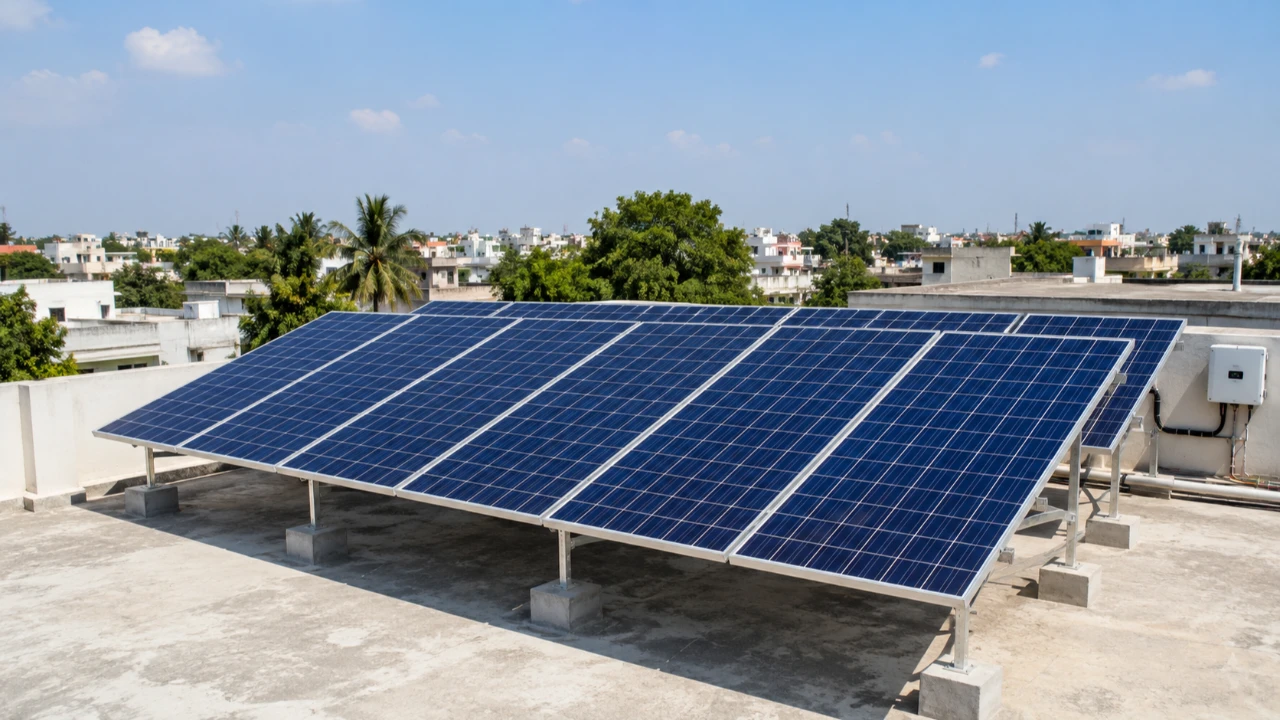
Before looking at technical specifications, you must evaluate your roof. Your roof acts as the foundational footprint for your future home solar panel system.
When examining your roof, keep the following critical factors in mind:
- Available Area: Typical residential solar systems require roughly 2 square meters of clear space. For a standard home solar system, you may need at least 20 to 25 square meters of unshaded area.
- Shading and Obstructions: Trees, neighbouring buildings, chimneys, and even water tanks can cast shadows. Since even partial shading can significantly cut down energy generation, your panels must be placed in a completely shadow-free zone.
- Structural Integrity: Solar configurations are built to endure for a long time. Your roof must be structurally sound enough to support the weight of the panels and the mounting structures over this lifespan.
To ensure your home solar power system meets your daily needs, you need to know exactly how much electricity you consume. The easiest way to determine this is by looking at your utility bills from the past 12 months. Look closely at your peak summer and winter usage.
Match Your Backup Needs to the Right Solar Solution
Your local power grid's stability dictates the architectural framework of your system. Eastman offers solutions engineered to match different grid behaviours and backup needs perfectly.
On-Grid Solar Solution
If you live in an urban zone with an incredibly stable grid and rarely face blackouts, an on-grid configuration is your best bet. This system allows you to lower your electricity bills and maximise your rooftop investment with on-grid home solar systems. Any excess energy your panels generate during peak sunlight hours is fed back into the main utility grid via net metering.
Off-Grid Solar Solution
For areas plagued by frequent power outages or complete grid unreliability, an off-grid architecture is essential.
As it operates independently of the local utility, calculating your total off-grid solar system price upfront is vital, as it includes dedicated battery banks.
Hybrid Solar Solution
Want the financial savings of an on-grid connection alongside the security of emergency backup? A hybrid system offers the best of both worlds. You can power your home with a hybrid solar solution that reduces electricity bills and ensures a reliable backup during unexpected power cuts.
If you choose an on-grid or hybrid framework in India, you can significantly lower your upfront expenses by taking advantage of the government's PM Surya Ghar Muft Bijli Yojana.
Budgeting and Understanding the Price
When planning your budget, it is important to understand how the type of home solar system affects your overall investment. On-grid systems usually have the lowest upfront cost because they do not require battery storage.
Off-grid systems involve a higher investment due to the need for batteries and specialised inverters. Hybrid systems fall between the two, combining grid connectivity with battery backup to provide greater energy reliability while requiring a moderate to higher initial investment.
| Component/Feature | On-Grid System | Hybrid System | Off-Grid System |
|---|---|---|---|
| Grid Connection | Required | Required | Completely Independent |
| Storage (Batteries) | None | Battery Backup Included | Heavy Investment (Tubular/Lithium) |
| Net Metering Benefits | Yes | Yes (subject to local regulations and system configuration) | No |
| Upfront Cost Drivers | Standard Inverter + Panels | Hybrid Inverter + Battery + Panels | Heavy Battery Bank + Off-Grid Inverter |
| Overall Cost Profile | Lower Initial Capital | Moderate to Higher Initial Capital | Higher Initial Capital |
Explore the Eastman Solar Panel Range
Here is the structured overview of our official line-up of home solar systems to help you select the ideal solar panel system for your house. These solar panels are designed with the following features to support efficient energy generation, long-term reliability, and better value:
- BIS & ALMM Compliant (India): Certified solar modules that meet required quality standards and remain eligible for applicable government solar benefits.
- PID Resistant & Corrosion Resistant: Built to withstand challenging weather conditions while reducing performance loss and maintaining long-term efficiency.
- Durable Glass & Frame Structure: Designed with strong materials to improve protection against harsh environments and ensure consistent performance.
- High Module Efficiency Up to 22–23%+: Advanced solar technology helps generate more electricity from available sunlight, improving overall energy output.
- Suitable for Rooftop Solar Projects: Ideal for residential and small commercial installations where efficient space utilisation is important.
- Long Lifespan with Low Maintenance: Reliable construction helps reduce replacement requirements and supports long-term solar energy usage.
Mono Bifacial (DCR) [500W and 550W]
Backed by a 27-year warranty*, these modules combine high-yield dual-sided power generation with Domestic Content Requirement (DCR) compliance. They capture sunlight from both sides to improve energy output while meeting the local manufacturing criteria required for eligible government benefits, such as the PM Surya Ghar Muft Bijli Yojana.
TOPCon Technology (DCR) [580W and 625W]
Backed by a 30-year warranty*, these modules combine advanced TOPCon cell technology with strict Domestic Content Requirement (DCR) compliance. Designed for high-output residential installations, they deliver improved solar efficiency while meeting eligibility requirements for applicable government and institutional incentives.
Choose the Right Home Solar System for Your Home Today
Planning your home solar system comes down to balancing your rooftop space, daily energy usage, and specific power backup needs. Whether an on-grid setup matches your lifestyle or you require a strong off-grid configuration, understanding your baseline requirements helps you optimise your long-term setup.
Eastman provides a fully integrated ecosystem of elite solar panels, intelligent inverters, and durable energy storage options, ensuring your home transitions to clean, uninterrupted power seamlessly.
Ready to power your home with solar? Explore Eastman's complete range of solar solutions and connect with our experts to choose the ideal system for your energy needs.
```html
Frequently Asked Questions
1. How do I plan a solar system for my house?
Review 12 months of electricity bills, assess unshaded roof space, identify your backup needs, and choose between an on-grid, off-grid, or hybrid solar system based on your energy requirements.
2. How many solar panels do I need to run a house?
The number of solar panels depends on your electricity consumption and panel wattage. For example, a 3 kW solar system generally requires six 500 W solar panels. Your exact requirement may vary depending on available roof space and sunlight conditions.
3. What size solar system do I need for my home?
Your ideal solar system size depends on monthly electricity consumption, available roof space, local sunlight conditions, and backup requirements. A professional site assessment can help determine the appropriate system capacity for your home.
4. Can a house run 100% on solar power?
Yes, a house can run entirely on solar power with sufficient solar panel capacity and battery storage. However, actual performance depends on electricity consumption, sunlight availability, seasonal conditions, and the system configuration.
5. Is it worth installing solar panels on your home?
Installing solar panels can be worthwhile if your roof receives adequate sunlight and your household has regular electricity consumption. A solar system can reduce dependence on grid electricity and deliver long-term savings, depending on installation costs, electricity tariffs, system performance, and maintenance expenses.
 78728 78728