




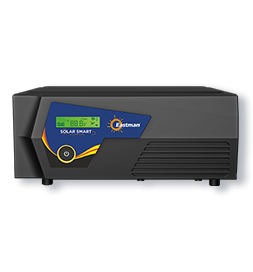

 500VA - 2500VA
 PWM
 5




Eastman Solar | Off-Grid Power Solutions
Power Your Home with Eastman Off-Grid Solar Inverters
An off-grid solar inverter converts the direct current generated by solar panels and stored in batteries into alternating current for household or business appliances.
Eastman Solar offers off-grid inverter solutions for homes, shops, offices, farms, and remote locations. The range covers Pulse Width Modulation (PWM) and Maximum Power Point Tracking (MPPT) technologies, with selected series spanning 500VA to 10000VA.
PWM & MPPT Technologies
Off-grid inverter options for different loads and battery configurations.
Benefits
Why Choose an Off-Grid Solar Inverter?
An off-grid solar inverter system can provide greater control over how solar energy is generated, stored, and used.
Backup During Outages
Stored battery energy can support essential appliances when grid power is unavailable.
Reduced Grid Dependence
Solar panels and batteries can meet part or all of a property's electricity requirements, depending on system sizing and conditions.
Suitable for Remote Areas
An off-grid setup can supply electricity where grid access is weak or unavailable.
Efficient Battery Charging
PWM or MPPT charge-control technology manages the energy supplied to the battery.
Lower Generator Usage
Solar generation and battery storage can reduce reliance on diesel generators.
Explore the Range
Explore Eastman Off-Grid Solar Inverter Range
Compare Eastman Solar's four off-grid inverter series by capacity, battery voltage, charging technology, and warranty.
| Eastman Series | Capacity Range | Battery Voltage | Charging Technology | Warranty* |
|---|---|---|---|---|
| Solar Smart | 500VA–2500VA | 12V / 24V | PWM | 5 years |
| Solar Smart Max | 500VA–10000VA | 12V / 24V / 48V+ | MPPT | 5 years |
| Solar Prime | 850VA–3000VA | 12V / 24V | PWM | 3 years |
| Solar Prime Max | 1000VA–10000VA | 12V / 24V / 48V+ | MPPT | 3 years |
*Warranty is subject to applicable terms and conditions. Confirm the specifications and warranty for the selected model before purchase.
Solar Smart
500VA–2500VA | PWM Technology
The Solar Smart series uses Pulse Width Modulation (PWM) charging technology. It is suitable for homes and smaller establishments that need solar backup for essential loads such as lights, fans, televisions, routers, and similar appliances.
Battery voltage: 12V / 24V
Warranty: 5 years*
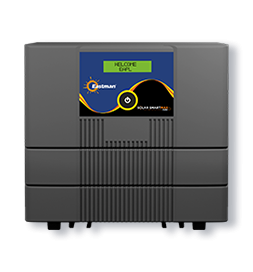
Solar Smart Max
500VA–10000VA | MPPT Technology
Solar Smart Max combines MPPT technology with a wide capacity range. It is suitable for users seeking improved solar energy utilisation, intelligent battery charging, and support for larger connected loads.
Battery voltage: 12V / 24V / 48V+
Warranty: 5 years*
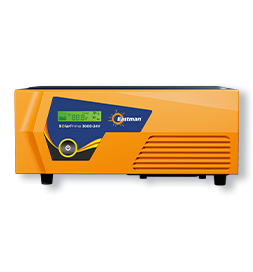
Solar Prime
850VA–3000VA | PWM Technology
The Solar Prime series offers PWM-based models for common residential and small commercial backup requirements, using 12V or 24V battery configurations.
Battery voltage: 12V / 24V
Warranty: 3 years*
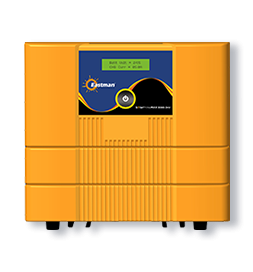
Solar Prime Max
1000VA–10000VA | MPPT Technology
Solar Prime Max offers MPPT-based options for larger homes, offices, shops, farms, and other installations requiring greater system capacity.
Battery voltage: 12V / 24V / 48V+
Warranty: 3 years*
Selection Guide
How to Choose the Right Off-Grid Solar Inverter
Review connected load, required backup duration, battery configuration, and solar input limits before selecting an off-grid solar power inverter.
Calculate the Connected Load
List the appliances that must operate together and add their power ratings. Include the starting load of equipment such as refrigerators, pumps, and motors.
Decide the Backup Duration
Estimate how many hours appliances must run without solar generation or grid power. Longer backup requires greater battery capacity.
Choose Inverter Capacity
Select a VA or watt rating that can support the total running load while allowing a reasonable safety margin.
Match the Battery Bank
Confirm the required battery voltage, capacity, battery type, and number of batteries. The configuration must match inverter specifications.
Size the Solar Panels
Ensure the panel array falls within the inverter's supported solar input, voltage, and charging limits.
Check Protection & Compatibility
Choose a PWM or MPPT inverter with the required capacity, battery configuration, safety protections, and applicable quality certifications.
Find the Right Off-Grid Inverter
Explore Eastman Solar's PWM and MPPT inverter series to match your appliances, battery bank, and solar panel setup.
GOT QUESTIONS?
Frequently Asked Questions
Find answers to common questions about off-grid solar inverters, batteries, and backup power.
An off-grid solar inverter converts DC electricity from solar panels and batteries into AC electricity for compatible appliances. It can operate independently of the electricity grid when the system is correctly configured.
An off-grid inverter is designed to operate independently of the grid and typically uses batteries to store energy for later use. An on-grid inverter is designed to work with the electricity grid, and backup capability depends on the system design.
Yes. It can operate independently using electricity generated by solar panels and stored in batteries. Available power depends on solar generation, battery capacity, inverter size, and connected appliance load.
Most off-grid systems use batteries to store energy for nighttime, cloudy periods, or low solar generation. Battery requirements depend on inverter design and desired backup duration.
Backup duration depends on usable battery capacity, connected load, battery condition, and inverter efficiency. Running fewer essential appliances generally provides longer backup than running multiple high-load appliances.
Yes. A correctly sized system can power compatible appliances such as lights, fans, televisions, refrigerators, and routers. A load assessment helps determine the suitable inverter, solar panel, and battery combination.
 78728 78728