



Introduction
Buying your first home involves several long-term decisions, from selecting appliances to planning monthly expenses. Electricity costs become an important part of home ownership, making rooftop solar a practical choice for many families.
Understanding the advantages of solar panels in homes helps first-time homebuyers evaluate savings, reliability, and later energy needs. A well-planned solar system can reduce dependence on grid electricity while making better use of available rooftop space.
Eastman supports Indian households with on-grid, hybrid, and off-grid solar solutions designed around different power requirements. Let's explore how solar panels can improve your first home investment and support better energy planning from the beginning.
7 Advantages of Solar Panels in Homes for First-time Homebuyers
Solar systems provide value beyond electricity savings. They support better energy management, improved reliability, and long-term financial planning for homebuyers.
1. Lower Monthly Electricity Expenses
Solar panels generate electricity from sunlight, decreasing the amount of power purchased from the grid during daytime hours. The savings depend on system size, household consumption, location, and electricity tariffs.
A correctly designed rooftop solar system can support consistent savings throughout its operating period.
2. Better Control Over Energy Costs
Electricity tariffs can change over time and increase household expenses. Solar generation helps homebuyers produce a portion of their own electricity and reduce complete dependence on purchased power.
This is one of the important benefits of solar panels in homes because it supports better control over long-term energy spending. Homebuyers can plan their monthly budgets with greater confidence when solar generation contributes towards daily electricity needs.
3. Better Use of Rooftop Space
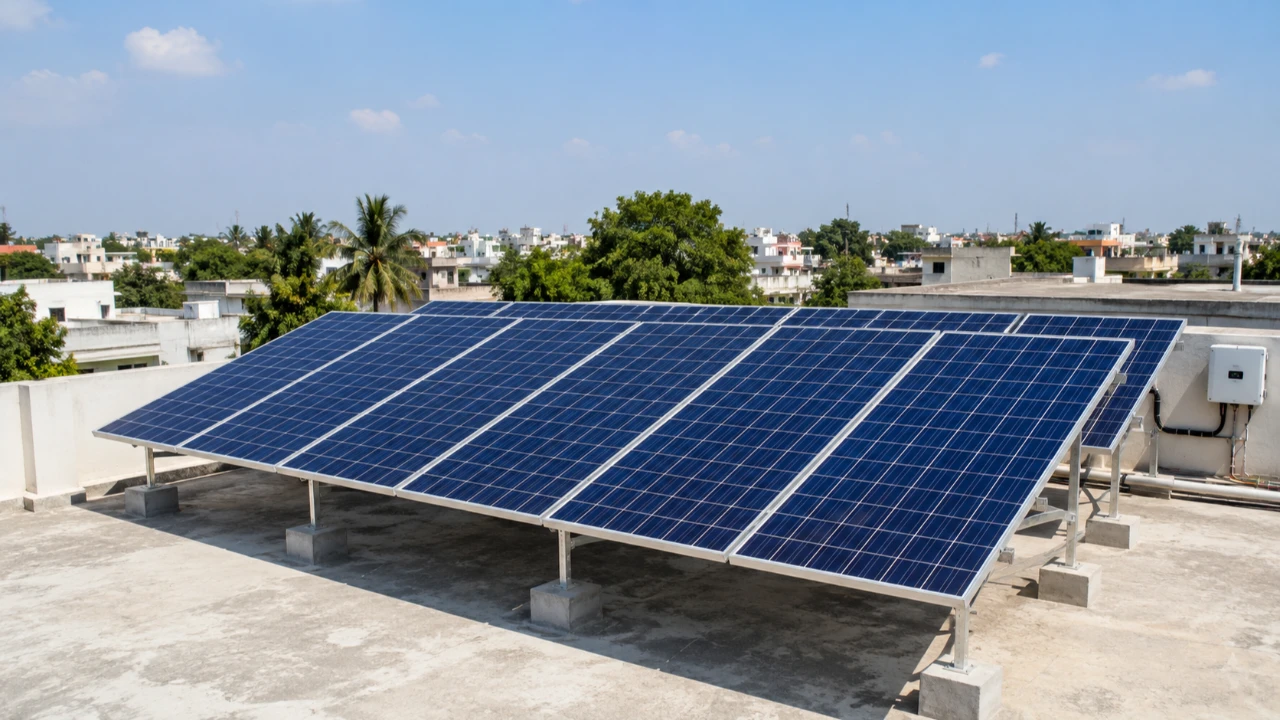
Many residential rooftops receive direct sunlight but remain unused for most of the day. Installing solar panels converts this available space into an energy-generating area for household consumption.
A well-designed rooftop system considers sunlight availability, roof direction, and shading conditions. This helps homebuyers achieve better output from the available installation area.
4. Cleaner Energy Generation for Everyday Needs
Generating electricity from sunlight instead of depending completely on conventional energy sources is one of the key benefits of solar energy in homes. Solar adoption allows families to support cleaner energy use while reducing their dependence on grid electricity during suitable daylight hours.
5. Flexible Backup Options During Power Cuts
Different homes have different backup requirements based on location and electricity availability. Understanding the benefits of solar panels in homes helps homebuyers select the right system type according to their power needs.
Off-grid solar systems are ideal for homes in areas with frequent power cuts, unreliable grid supply, or limited grid access. These systems work independently with battery storage to provide electricity during outages.
For homes with stable grid supply, on-grid systems can focus on reducing electricity bills, while hybrid systems combine solar generation, battery storage, and grid support for added flexibility.
6. Government Subsidy Support for Eligible Systems
PM Surya Ghar Muft Bijli Yojana supports eligible residential rooftop solar adoption through approved vendors and official processes. Understanding the advantages of solar panels in homes helps evaluate subsidy benefits, savings potential, and suitable solar options before installation.
For suitable on-grid and hybrid projects, homebuyers can receive central subsidy support of up to ₹78,000. Some states also provide additional subsidy benefits depending on local policies and eligibility requirements. Homebuyers should check their state renewable energy portal before starting installation.
7. Improved Long-term Home Value
Solar systems support better energy planning for families expecting higher electricity consumption later. Growing appliance usage, cooling requirements, and lifestyle changes can increase household power demand. The benefits of having solar panels on your home's roof include improved energy management and better preparation for long-term ownership.
What First-time Homebuyers Should Check Before Installation
Installing solar requires more than selecting panels. First-time homebuyers should review system design, product quality, installation standards, and service support before making a decision.
1. Evaluate Roof Condition
Check roof strength, available space, sunlight exposure, and shading before installation. A proper assessment helps determine the right system size and panel placement.
2. Select the Right Solar System Type
Choose between on-grid, hybrid, or off-grid systems based on electricity needs, grid reliability, and backup requirements. Off-grid systems suit homes with frequent power cuts or limited grid access.
3. Compare Panel Certifications and Warranty
Review panel certifications, warranty terms, efficiency ratings, and product specifications to ensure better quality and long-term performance.
4. Check Installation Quality
Ensure proper mounting, wiring, earthing, and safety checks during installation. Quality installation supports better generation and system reliability.
5. Review Subsidy and Documentation Requirements
Check eligibility, documents, approved vendors, and local requirements before installation. Under PM Surya Ghar Muft Bijli Yojana, eligible on-grid and hybrid projects can receive central subsidy support up to ₹78,000. Additional state subsidies depend on local policies and eligibility.
6. Check Service and After-sales Support
Review warranty coverage, service timelines, maintenance support, and response processes before choosing a solar provider.
Eastman DCR Solar Panels for Residential Rooftops
Solar panel quality directly affects long-term performance, reliability, and ownership value. Eastman offers Domestic Content Requirement (DCR) solar panels for residential rooftops and subsidy-linked installations.
DCR Mono Bifacial Solar Panels
Available in 500W and 550W ranges, these panels offer Bureau of Indian Standards (BIS) and Approved List of Models and Manufacturers (ALMM) compliance. They also feature Potential Induced Degradation (PID) resistance, corrosion resistance, a durable glass and frame structure, and module efficiency up to 22–23%+. Their bifacial design helps capture sunlight from both sides for better generation potential.
DCR TOPCon Technology Solar Panels
Available in 580W and 625W ranges, these panels provide BIS and ALMM compliance, PID resistance, corrosion resistance, durable construction, and module efficiency up to 22–23%+. They support homebuyers seeking higher output potential and reliable rooftop solar performance.
Contact Eastman for Your First Home Solar Investment
The advantages of solar panels in homes become more valuable when homebuyers select the right technology, system type, and installation partner. A well-planned solar system can support lower electricity expenses, better energy management, and reliable power usage for years.
Eastman supports first-time homebuyers with DCR solar panels, on-grid systems, hybrid solutions, and off-grid options based on different household requirements. Our solutions include long warranty coverage, 24x7 service support, and two-hour service response time to provide better ownership confidence.
Eligible homebuyers can explore PM Surya Ghar Muft Bijli Yojana benefits along with applicable state subsidy options for rooftop solar projects. To plan a suitable solar solution for your new home, contact Eastman and discuss your energy requirements today.
 78728 78728