





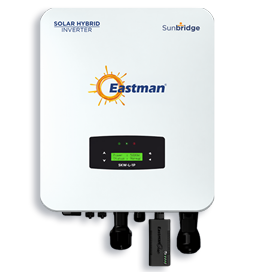

Solar Hybrid Inverter (IP65)
Three Phase — High Voltage
 5kW, 10kW & 15kW
Range
 10
10
Years Warranty*
*T&C Apply
What Makes It Different?

Reliability Life Uninterrupted

IP65 Enclosure
Install it on your terrace or outside wall without worry — rain, dust, and humidity won't affect performance.

Fast Grid Switching
Your sensitive devices — computers, refrigerators and TV stay ON without a flicker or restart. True uninterrupted power at home.

Type-II SPD Enabled AC and DC side
Keeps System remains protected from Solar lightning and grid spikes — from both Solar Side & Grid Side — no extra device needed.

Total Cost of Ownership A Lifetime of Value

Low startup DC voltage
Starts generating electricity earlier in the morning and continues later in the evening — More free electricity everyday.

Double MPPT - Two Independent Maximum Power Point Trackers (MPPT)
More electricity from every corner of your roof. Shading on one side does not affect the other and keeps the system protected, even if one tracker has a problem.

Maximum DC Overloading 50%
Takes in 50% more power from solar panels — It charges the battery faster and provides backup when you need it most.
Benefits Built For You

More Affordable with ₹78,000 PM Surya Ghar Subsidy (Up to 10kW)

IP65 Protection for All
Weather Conditions

Long-Term Reliability with
10-Year Warranty

97% Efficiency for Maximum
Solar Output

Unity Power Factor for
Efficient Power Usage

Uninterrupted Power for
Day and Night Use
A Perfect Solar Fit For

Residential Rooftops

Small Offices

Schools

Petrol Pump

Flour Mills

Cold Storage Unit
Downloads 
FAQs
What is a High Voltage Solar Hybrid Inverter and how is it different from a Low Voltage Hybrid Inverter?
A High Voltage Solar Hybrid Inverter operates on battery voltages typically ranging from 120V to 480V DC, enabling higher efficiency, lower current flow, and reduced cable losses. Unlike low voltage inverters suited for homes, high voltage inverters are designed for large residential, commercial, and industrial energy needs.
What are the advantages of a High Voltage Solar Hybrid Inverter over a Low Voltage system?
High voltage systems deliver superior efficiency, lower heat generation, thinner cable requirements, and better performance at higher capacities. They are ideal when large battery banks and high power loads need to be managed simultaneously without energy loss.
Which applications are best suited for High Voltage Solar Hybrid Inverters?
High Voltage Solar Hybrid Inverters are best suited for large bungalows and villas, factories, warehouses, hospitals, hotels, IT offices, shopping complexes, cold storage units, and agricultural setups with high and continuous power demands.
What battery type is recommended for High Voltage Solar Hybrid Inverters?
High voltage lithium-ion battery packs, particularly LFP (Lithium Iron Phosphate) batteries, are the preferred choice. They offer high energy density, longer cycle life of 3,000 to 6,000 cycles, built-in BMS protection, and seamless compatibility with high voltage inverter systems.
What is the efficiency of a High Voltage Solar Hybrid Inverter?
High Voltage Solar Hybrid Inverters typically deliver efficiencies of 97% and above. Higher operating voltage means lower current, which directly reduces resistive losses across cables and internal components — translating into more usable power from every unit of solar energy generated.
Can a High Voltage Solar Hybrid Inverter function as a complete replacement for a DG Set?
Yes, a properly sized High Voltage Solar Hybrid Inverter with an adequate lithium battery bank can fully replace a diesel generator for commercial and industrial applications — delivering silent, emission-free, and virtually zero running cost power backup round the clock.
Is a High Voltage Solar Hybrid Inverter suitable for three phase loads?
Yes, high voltage solar hybrid inverters are available in three phase configurations, making them suitable for commercial and industrial facilities running three phase machinery, HVAC systems, elevators, and large motor-driven equipment.
What is the price range of High Voltage Solar Hybrid Inverters in India?
High Voltage Solar Hybrid Inverter prices in India typically range from ₹1,00,000 to ₹10,00,000 and above, depending on capacity (5 kW to 100 kW+), phase configuration, battery voltage range, brand, and advanced features like remote monitoring and grid export control.
How does MPPT technology in a High Voltage Solar Hybrid Inverter improve solar generation?
High Voltage Solar Hybrid Inverters are equipped with advanced multi-string MPPT charge controllers that continuously track and optimise the maximum power point of each solar string. This ensures peak energy harvest even under partial shading, cloud cover, or varying temperature conditions throughout the day.
What safety and protection features should a High Voltage Solar Hybrid Inverter have?
A reliable High Voltage Solar Hybrid Inverter must include anti-islanding protection, over and under voltage protection, short circuit protection, DC arc fault detection, battery over-charge and deep discharge protection, surge protection, and IP65 weatherproof rating — ensuring safe and durable operation across all weather and load conditions.
Are High Voltage Solar Hybrid Inverters eligible for government subsidies or tax benefits in India?
Residential high voltage solar hybrid installations may qualify under PM Surya Ghar Muft Bijli Yojana. For commercial and industrial users, while direct subsidies are limited, accelerated depreciation of up to 40% under the Income Tax Act makes high voltage solar hybrid systems a highly attractive financial investment.
How do I monitor and manage a High Voltage Solar Hybrid Inverter system remotely?
Most High Voltage Solar Hybrid Inverters support Wi-Fi, RS485, Modbus, and cloud-based monitoring platforms. Users can track real-time solar generation, battery state of charge, grid import and export, load consumption, and system alerts remotely through dedicated mobile apps or web dashboards — enabling complete visibility and control from anywhere.