



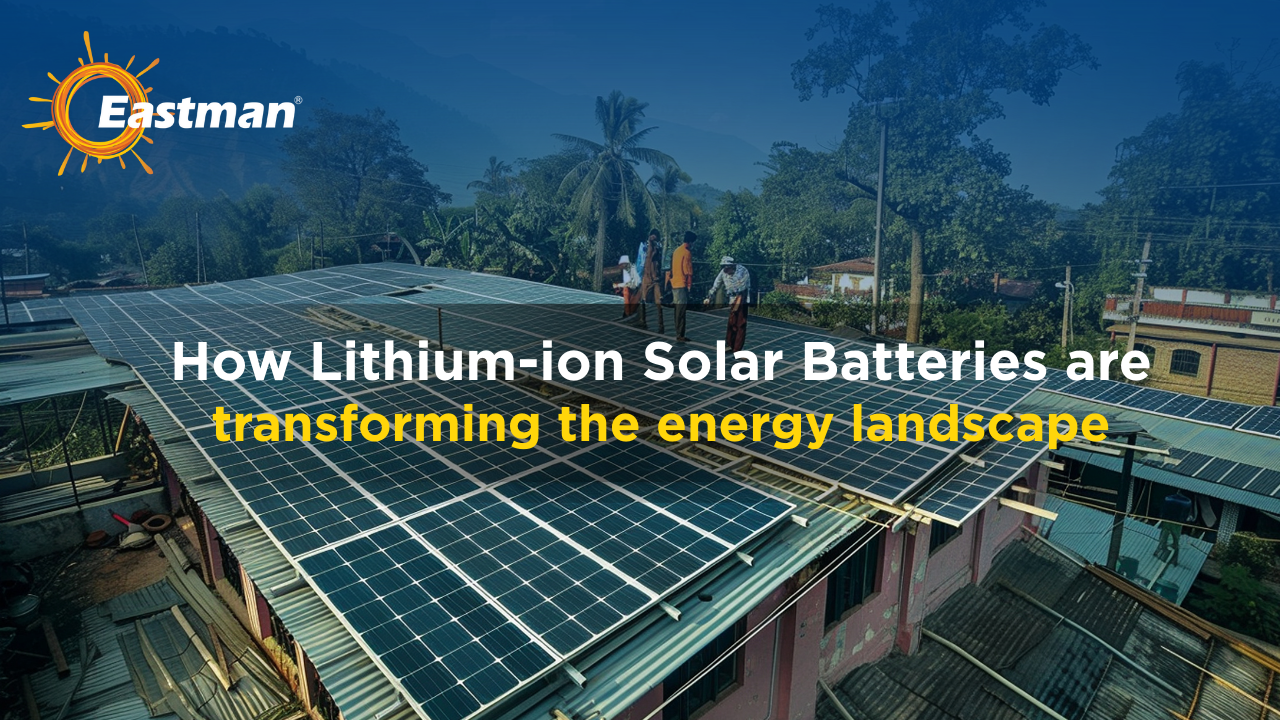
How Lithium-ion Solar Batteries are transforming the energy landscape
 January 11, 2026 / Solar Batteries
 The global energy landscape is undergoing one of its most profound transformations in history. Renewable energy adoption is surging; electrification is accelerating across industries, and consumers are demanding cleaner, smarter, more resilient power solutions. At the heart of this energy transition lies a technology that’s quietly but fundamentally reshaping how we store and consume energy: lithium-ion solar batteries.
No longer limited to electric vehicles and portable electronics, lithium-ion batteries are now powering homes, businesses, microgrids, and entire communities. Their rapid integration with solar photovoltaic (PV) systems marks a pivotal shift from traditional grid dependency to distributed energy empowerment.
In this blog, we’ll explore how lithium-ion solar batteries are transforming the energy landscape, why they are becoming the most preferred storage solution, and how they enable a new era of efficiency, sustainability, and energy independence.
Whether you’re evaluating energy storage for your home, business, or future project, this guide will give you the insights you need to make informed decisions in 2026 and beyond.
The rise of solar energy & the storage challenge
Solar power generation has seen exponential growth over the last decade. Falling panel prices, government incentives, and rising electricity costs have driven millions of homes and businesses to adopt solar PV systems.
Yet, solar energy generation inherently depends on sunlight availability. Without energy storage:
1. Excess power generated during the day goes unused
2. Night-time energy needs rely solely on the grid
3. Outages and instability still disrupt power supply
That’s where solar batteries come in, storing excess energy for later use and enabling true energy autonomy.
Among storage technologies, lithium-ion batteries have emerged as the clear leader due to their superior performance, efficiency, and scalability.
What makes Lithium-ion batteries ideal for solar storage
Lithium-ion battery technology is not new; it powers smartphones, laptops, EVs, and more. But its adaptation for solar storage has opened a host of advantages:
1. High Energy Density
Lithium-ion batteries store a large amount of energy in a compact space. This translates to:
1. More storage capacity per unit volume
2. Smaller, space-efficient installations
3. Higher usable energy
For homeowners with limited space or commercial rooftops with constraints, this advantage is significant.
2. Longer Cycle Life
Cycle life refers to how many times a battery can charge and discharge before its capacity degrades significantly.
Lithium-ion batteries generally offer 4,000–6,000+ cycles, far higher than those of older lead-acid batteries.
This means:
1. Longer usable life
2. Better long-term ROI
3. Lower replacement costs
Do more, worry less.
3. Faster Charging and Discharging
Lithium-ion batteries accept charge quickly and provide rapid discharge when needed; perfect for solar systems where:
1. Sudden cloud cover reduces output
2. High demand spikes occur
3. Grid support is required
The speed and responsiveness of lithium-ion systems are unmatched by most traditional batteries.
4. High Round-Trip Efficiency
Round-trip efficiency measures how much energy you get compared to what you put in. Lithium-ion storage systems often achieve 90%+ efficiency, meaning less energy wasted.
This directly improves:
1. Self-consumption
2. Cost savings
3. System performance
5. Low Maintenance
Unlike lead-acid batteries which require regular water/top-up maintenance, lithium-ion batteries are largely maintenance-free, making them much more convenient and safer for everyday use.
How Lithium-ion are changing energy game
Now that we understand the advantages, let’s examine how this technology is transforming the energy landscape:
1. Enabling True Energy Independence
Traditionally, solar systems without storage still rely on the grid at night or during low generation periods. With lithium-ion solar batteries, users can:
1. Store excess solar energy during the day
2. Use that energy at night
3. Reduce or eliminate grid dependency
This is particularly powerful in regions with high electricity costs or unstable grid infrastructure.
2. Supporting Grid Resilience and Peak Load Shaving
Utility grids everywhere are being stretched by rising demand and unpredictable usage patterns. Lithium-ion storage helps through:
1. Peak load shaving; reducing demand during high-cost periods
2. Frequency regulation
3. Grid stabilization
Large commercial systems and microgrids can use stored solar energy to support grid operations, enabling more stable and sustainable networks.
3. Boosting Renewable Integration
Renewables like wind and solar are inherently variable. Storage acts as a “shock absorber” for grids by capturing excess energy when production is high and releasing it when needed. This smooths supply curves and reduces reliance on fossil fuel Peaker plants.
4. Reducing Carbon Footprint
Each unit of solar energy stored and used displaces fossil fuel generation. Over the lifespan of a lithium-ion battery, this amounts to:
1. Lower greenhouse gas emissions
2. Reduced carbon dependence
3. Cleaner air and environment
5. Enhancing Solar Economics
Solar power with lithium-ion storage maximizes self-consumption, meaning you use more of the energy you generate and buy less from utilities. This translates to:
1. Lower energy bills
2. Faster investment payback
3. Greater financial predictability
6. Enabling Remote and Off-Grid Power
In remote locations without reliable grid access, solar + storage is not just convenient; it’s transformative. Communities, schools, hospitals, and infrastructure can operate independently, powered by clean energy.
Applications of Lithium-ion batteries
Let’s look at how this technology is being deployed across different segments:
1. Residential Solar Storage
Homeowners are increasingly adopting lithium-ion batteries to:
1. Power homes at night
2. Backup during outages
3. Reduce electricity bills
4. Integrate EV charging
Coupled with solar panels, these systems provide a smooth, cost-effective power experience.
2. Commercial & Industrial (C&I) Segments
Businesses benefit from solar + storage through:
1. Peak demand charge reduction
2. Enhanced reliability
3. Lower operating costs
Large facilities with high energy demands can now store solar energy during off-peak hours and use it during critical peak periods, optimizing energy spend.
3. Critical Infrastructure & Emergency Power
Hospitals, data centers, and emergency facilities often require uninterrupted power. Lithium-ion batteries provide:
1. Fast response backup
2. Clean energy support
3. Reliable resilience
This is especially vital in areas with frequent grid outages or extreme weather.
What to consider before choosing Lithium-ion battery
Like any technology, proper evaluation ensures you choose the right system for your needs. Here are some key considerations:
1. Capacity & Power Rating: Determine how much energy you need to store and how much power you’ll draw simultaneously.
2. Depth of Discharge (DoD): Higher DoD means more usable energy before battery capacity is reduced.
3. Warranty & Lifespan: Look for systems with long cycle life and robust warranty support.
4. Integration with Solar and Inverter: Ensure seamless compatibility for optimal performance.
5. Scalability: Modular designs enable system expansion as needs grow.
Eastman Solar+ Lithium-ion battery Solutions
For those ready to harness the power of lithium-ion energy storage, Eastman offers robust, scalable, and high-performance solutions designed for modern solar applications.
Why Eastman Systems Stand Out
1. Compatibility with residential and commercial solar
2. High-efficiency battery integration
3. Intelligent energy management
4. Scalable modular designs
5. Trusted global product quality
Whether you’re powering a family home or a large commercial facility, Eastman’s solar + battery solutions are engineered to deliver performance and longevity.
Conclusion
Lithium-ion solar batteries are not merely supporting solar systems; they are reshaping the entire energy ecosystem. Their rapid adoption reflects a broader shift toward resilient, clean, and cost-effective energy solutions.
From homeowners seeking greater independence to businesses optimizing energy costs, from remote communities gaining reliable power to grids balancing renewable variability, lithium-ion solar batteries are powering a new energy era.
And as technology evolves, solutions from trusted energy brands like Eastman are helping users harness this transformation with confidence, performance, and long-term value.
Ready to unlock true energy independence?
Discover premium lithium-ion solar batteries and integrated solar storage solutions from Eastman.
Contact Eastman for more information.
Explore Eastman Solar battery Solutions.
Get to know your nearest Store Locator for convenience.
FAQ’s
Q. What makes lithium-ion batteries better than traditional lead-acid batteries?
A. Lithium-ion batteries have higher energy density, longer cycle life, faster charging, higher efficiency, and require little to no maintenance.
Q. How long do lithium-ion solar batteries last?
A. Most high-quality systems last 10–15 years or more, depending on usage patterns and environmental conditions.
Q. Can lithium-ion batteries power a home during a blackout?
A. Yes, when configured properly with solar panels and inverters, lithium-ion batteries can provide seamless backup power during outages.
Q. Are lithium-ion batteries safe?
A. Modern lithium-ion batteries include multiple safety features like thermal management, overcharge protection, and advanced control systems.
Q. How do I choose the right battery size for my solar system?
A. Battery sizing depends on your daily energy usage, peak power needs, and backup requirements. Working with a qualified installer helps determine optimal capacity.
Q. Do lithium-ion batteries work in all climates?
A. Yes, but temperature impacts performance. Most systems include management features to maintain safe operating conditions.
 78728 78728