



Introduction
Solar energy systems are commonly classified into on-grid, hybrid and off-grid configurations. While on-grid systems depend on the utility grid for electricity exchange, off-grid systems operate independently by using solar generation and battery storage.
For locations with unreliable grid availability or areas without grid connectivity, an off-grid setup can provide a practical energy solution. Understanding what an off-grid solar system is helps homeowners and businesses evaluate whether an independent solar power solution matches their electricity requirements.
What is an Off-grid Solar System?
An off-grid solar system is a standalone solar power setup designed to generate electricity without a connection to the utility grid. The electricity produced by solar panels is stored in batteries and used when required, including during periods when sunlight is unavailable.
Unlike grid-connected systems, off-grid systems need sufficient battery storage because there is no external electricity supply available as a backup.
When considering what an off-grid solar power system is, it is important to understand that the system is designed around energy independence. The required solar capacity and battery size depend on electricity consumption, backup needs and local sunlight conditions.
How Does an Off-grid Solar System Work?
An off-grid solar system follows a simple energy flow:
- Solar Panels Generate Electricity: Solar panels convert sunlight into DC electricity during the day.
- Solar Inverter Manages Power Conversion: The inverter converts DC electricity into AC power that can be used by household appliances.
- Battery Stores Excess Energy: Additional solar electricity is stored in batteries for use during evenings, cloudy conditions or low sunlight periods.
- Stored Energy Powers Loads: When solar generation is unavailable, stored battery energy supplies connected appliances.
What are the Main Components of an Off-grid Solar System?
Understanding the key components helps explain what off-grid solar systems are and how they operate independently.
Solar Panels
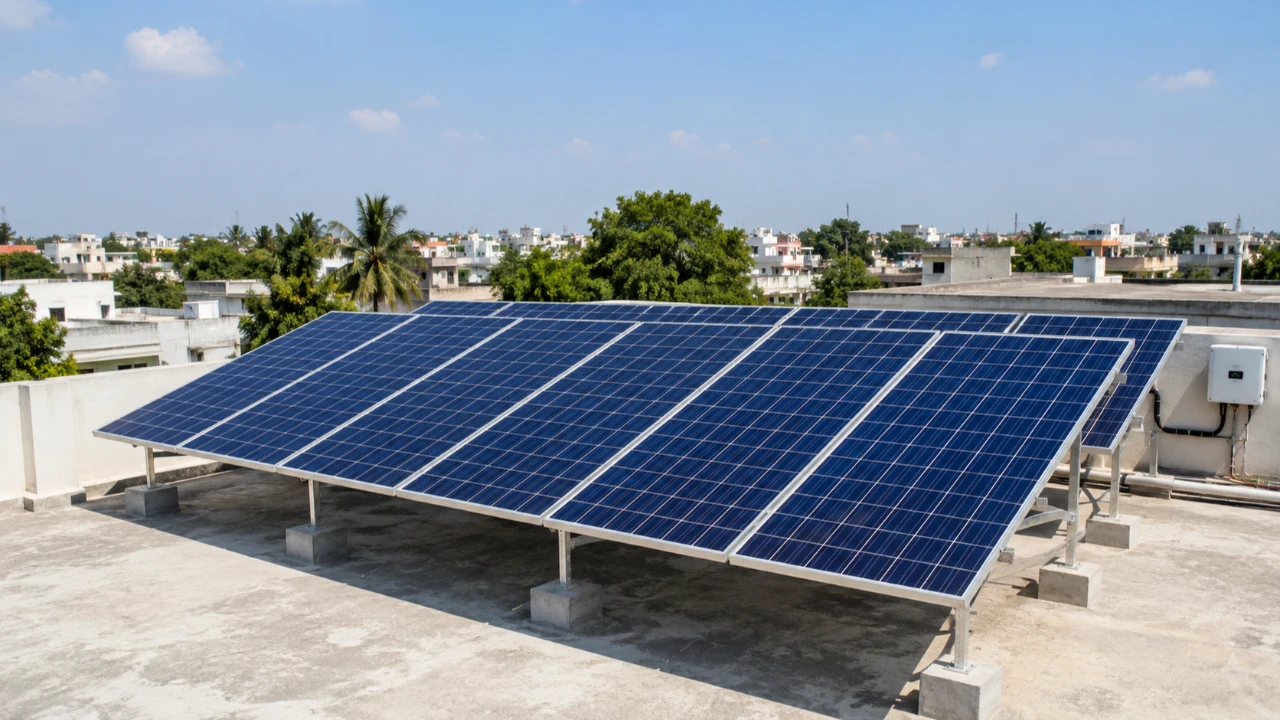
Solar panels are the primary source of electricity generation. They capture sunlight and convert it into electrical energy.
The number of panels required depends on:
- Daily electricity consumption
- Available sunlight
- Required system capacity
- Battery charging requirements
Solar Inverter
The solar inverter is a central component that converts DC electricity from solar panels and batteries into AC electricity for household or commercial loads.
Off-grid inverters may include features such as pure sine wave output, built-in solar charge controllers and Maximum Power Point Tracking (MPPT) technology to improve solar energy utilisation.
Battery Storage
Batteries store excess solar energy generated during the day. This stored energy can be used when solar generation is unavailable.
Battery capacity depends on:
- Required backup duration
- Connected appliance load
- Daily electricity usage
- Battery technology
Mounting Structure and Electrical Components
A complete system also includes mounting structures, cables, protection devices, connectors and other electrical components required for safe operation.
Where are Off-grid Solar Systems Used?
Off-grid solar systems are suitable for different applications where independent electricity supply is required.
Common applications include:
- Remote homes
- Farmhouses
- Rural areas
- Small commercial establishments
- Telecom infrastructure
- Outdoor lighting systems
- Locations with frequent power interruptions
The suitability of an off-grid system depends on electricity demand, available sunlight and storage requirements.
How is an Off-grid System Different From an On-grid System?
| Feature | Off-grid Solar System | On-grid Solar System |
|---|---|---|
| Grid connection | Operates independently | Requires grid connection |
| Battery storage | Essential | Optional |
| Backup during outage | Available with sufficient storage | Usually unavailable |
| Energy source | Solar panels and batteries | Solar panels and grid |
| Suitable for | Remote locations and backup needs | Homes with reliable grid supply |
The choice between these systems depends on whether the priority is energy independence or reducing electricity costs through grid-connected solar generation.
Explore Eastman Off-grid Solar Solutions
Eastman offers off-grid inverter solutions designed for applications requiring independent solar power generation. Its off-grid inverter range includes models with features such as pure sine wave output, built-in solar charge controllers and MPPT technology for efficient solar charging.
Eastman Solar Smart Max off-grid inverters are available with MPPT technology and different capacity options to support varying energy requirements. These solutions can be considered for homes, businesses and other applications where reliable standalone power is required.
Selecting the right configuration depends on factors such as connected loads, battery capacity, solar generation potential and expected backup duration.
Is an Off-grid Solar System Right for Your Requirement?
Learning what an off-grid solar power system is helps users evaluate whether an independent solar solution meets their energy needs. These systems are particularly useful where grid access is limited or where backup power availability is a priority.
The right system design depends on electricity consumption, solar potential, battery storage and inverter selection. A properly planned off-grid setup can provide reliable power while supporting greater energy independence.
At Eastman Auto & Power Limited, we provide solar solutions designed for residential, commercial and industrial applications. Contact Eastman to explore suitable off-grid solar solutions based on your power requirements, location and backup needs.
 78728 78728