



Introduction
Solar energy systems produce electricity by converting sunlight into usable electrical power.
While solar panels are the visible part of these systems, this conversion begins with much smaller units called solar cells.
So, what is a solar cell, and how does it relate to the different types of solar panels available today? The answer starts with the cell itself, as its material and structure influence how a panel is designed and performs.
Let's understand how solar cells work and explore the main panel technologies that use them.
What is a Cell in a Solar Panel Technology?
A solar cell is the basic electricity-generating unit of a solar panel. It uses the photovoltaic effect to transform sunlight into electrical energy. Several cells are connected to form a solar panel, which can then supply electricity for residential, commercial, and industrial applications.
It is the basic unit that absorbs sunlight and transforms it into direct current (DC) electricity. These cells use semiconductor materials that respond to sunlight and enable the generation of an electrical current.
Now you may wonder: what are photovoltaic cells? Photovoltaic cells are devices designed to convert light energy into electricity. Similarly, what are solar photovoltaic cells? They are solar cells that use the photovoltaic effect to generate electricity from sunlight.
The basic functions of a solar cell are to:
- Capture sunlight using semiconductor material.
- Convert light energy into electrical energy.
- Generate direct current electricity.
- Contribute to the overall output of a solar panel.
The material and structure of these cells can differ, which leads to different solar panel technologies.
How Do Solar Cell Materials Shape Different Panels?
Solar panels can be categorised according to the cell structure and photovoltaic material used in their construction. The three major types are monocrystalline, polycrystalline, and thin-film solar panels.
Each technology approaches solar energy conversion differently. This affects characteristics such as appearance, space requirements, flexibility, and suitability for different installations.
1. Monocrystalline Solar Panels
Monocrystalline panels use cells made from a single silicon crystal. This creates a uniform cell structure and gives the panels their characteristic dark appearance.
Their efficient energy conversion makes them particularly suitable for installations where available space needs to be used effectively. They are used across residential, commercial, and industrial applications.
Key characteristics:
- Made from a single silicon crystal.
- Generally more efficient than polycrystalline panels.
- Suitable for properties with limited installation space.
- Has a consistent dark appearance.
Monocrystalline cells are one of the established options, particularly where efficient use of available space is an important consideration.
At Eastman Auto & Power Limited, we offer monocrystalline solar panels for efficient residential and commercial solar power generation, including space-conscious rooftop installations.
2. Polycrystalline Solar Panels
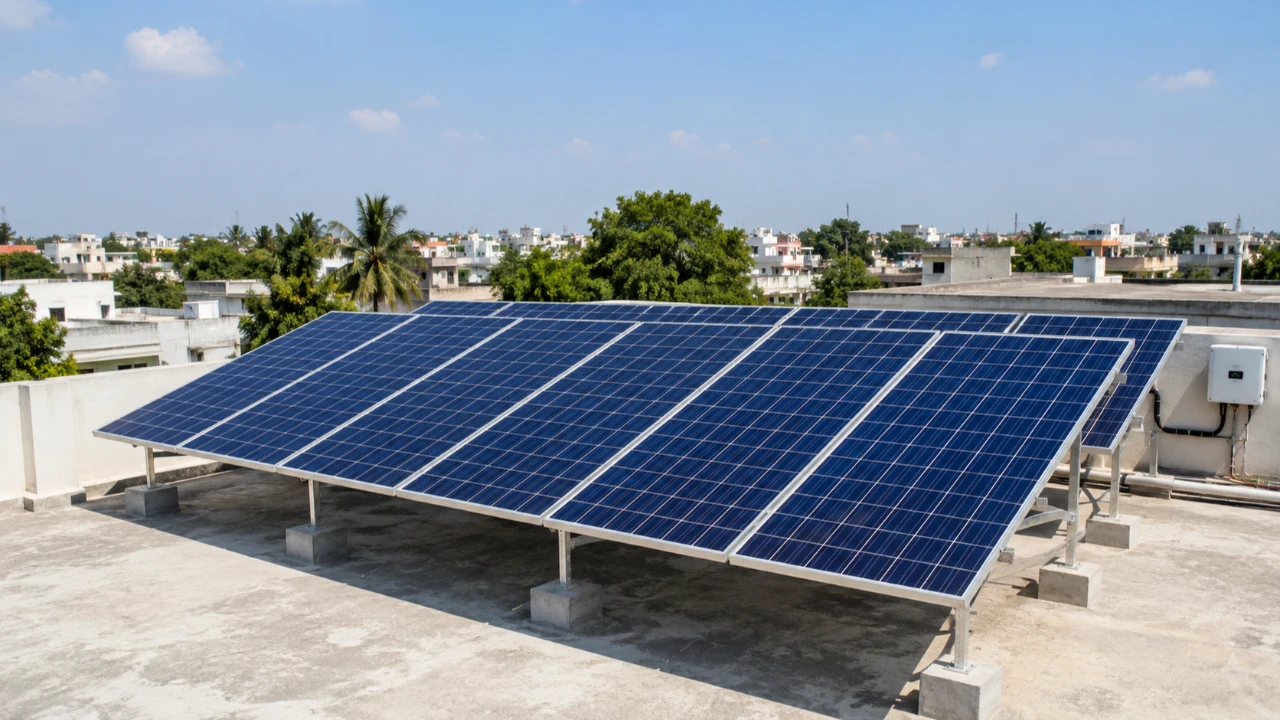
Polycrystalline panels use cells made from multiple silicon crystal fragments combined during manufacturing. This gives them a distinctive blue-toned appearance and makes them a practical option for different types of installations.
Key characteristics:
- Made using multiple silicon crystal fragments.
- Usually has a blue-toned appearance.
- Suitable for installations with more available space.
- Provides practical and reliable energy generation.
3. Thin-film Solar Panels
Thin-film panels utilise a thin layer of photovoltaic material applied to a supporting surface. Their lightweight construction and flexibility make them appropriate for applications where conventional crystalline panels may not be the most practical option.
They can be used for large commercial installations, specialised architectural applications, and portable solar solutions. Thin-film technology can also perform well under high temperatures and partial shade.
Key characteristics:
- Uses a thin photovoltaic material layer.
- Lightweight compared with many crystalline panels.
- Offers flexibility for certain applications.
- Suitable for specialised installations.
- Can perform well in high temperatures and partial shade.
This also shows why what a solar cell is cannot be answered only by referring to one type of material. Different cell structures can support different panel designs and applications.
Choose The Right Solar Cell Technology With Eastman
Choosing the right solar panel starts with understanding how its cells are designed and how that design suits the installation. Monocrystalline, polycrystalline, and thin-film technologies provide different approaches to converting sunlight into electricity.
At Eastman Auto & Power Limited, we offer solar panel solutions for different residential and commercial requirements. Evaluating your property and energy needs first can help you select a solar technology that fits the application and supports dependable electricity generation.
Before making a choice, assess your available installation area, energy requirements, site conditions, and intended application. Contact Eastman to explore suitable solar options based on your home's available space, energy needs, and installation requirements.
 78728 78728