



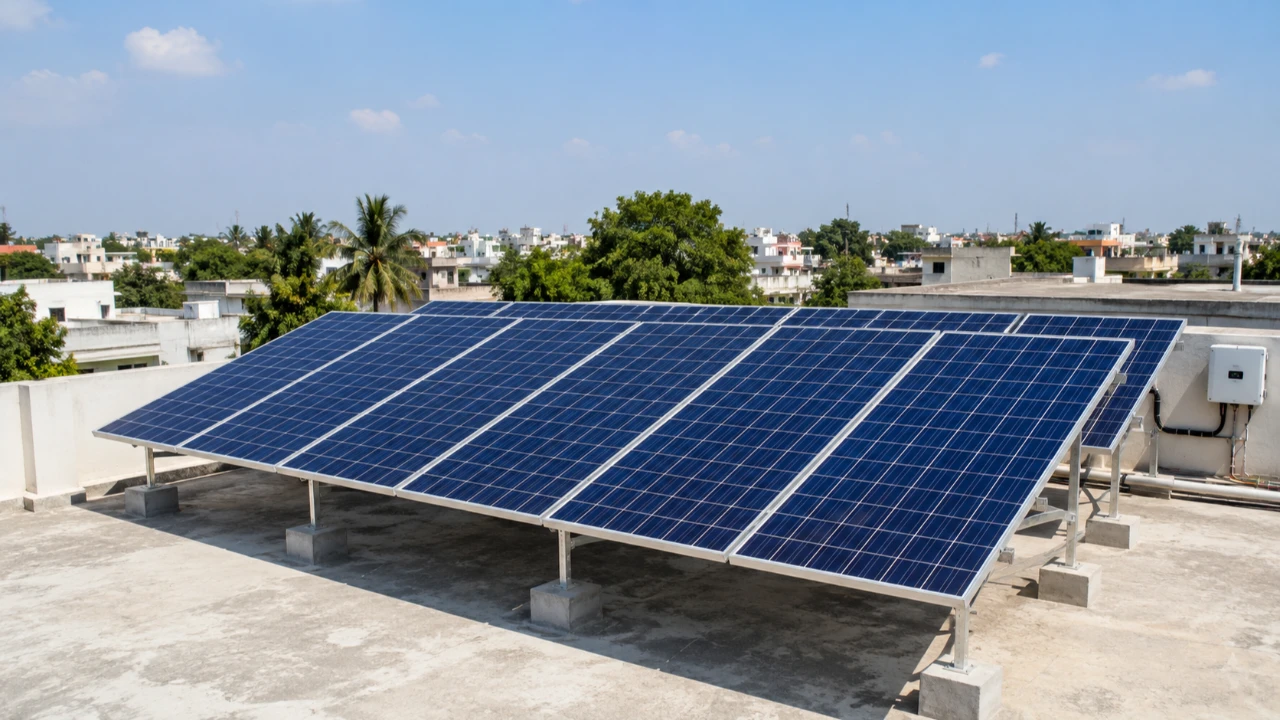
Introduction
Can a small change in panel placement influence solar power generation for decades? Many homeowners compare panel capacity, warranties, and system size before installation, yet one equally important factor often receives less attention. A successful rooftop solar project begins long before the first panel is installed.
The right solar panel direction is determined during the planning stage, where roof orientation, available space, structural conditions, and sunlight exposure are evaluated together. As a provider of integrated rooftop solar solutions, Eastman recognises that careful installation planning plays a significant role in long-term system performance.
Looking beyond common assumptions can help homeowners avoid costly installation changes and maximise electricity generation over the years. Let's see what factors should be considered before installation.
Why Does Solar Panel Direction Matter Before Installation?
The position of a solar panel determines how much sunlight reaches its surface throughout the day. During installation planning, selecting the right solar panel direction helps maximise electricity generation without increasing the number of panels.
Before installation begins, installers typically evaluate:
- Roof orientation to identify the most suitable solar panel direction for consistent sunlight exposure.
- Roof shape and available space to determine the most efficient panel layout.
- Nearby obstructions such as trees, neighbouring buildings, water tanks, and chimneys that may cast shadows.
- Mounting requirements to position the panels at an appropriate solar panel angle for better year-round performance.
- Future site conditions, including planned construction or tree growth, that could affect sunlight availability over time.
Planning the solar panel direction during the design stage reduces the need for layout changes later and helps create a more efficient rooftop solar installation.
How are Solar Panel Direction and Angle Determined?
The solar panel direction and angle in India are determined after evaluating several site-specific factors rather than following one standard measurement. Professional installers assess the property as a whole to identify a layout that supports consistent electricity generation throughout the year.
Solar Panel Direction
For most rooftop installations, south remains the preferred solar panel direction in India because it receives sunlight for a longer duration during the day. That does not mean every installation must face south.
East-facing and west-facing roofs can also deliver strong performance when the system is designed around the property's layout. The objective during installation is to make the best use of the available roof rather than forcing an ideal orientation that may not be practical.
Solar Panel Angle
The solar panel angle refers to the tilt of the panels relative to the ground. This angle affects how directly sunlight reaches the solar cells across different seasons.
The best angle for solar panels varies by location because the sun's position changes with latitude. During installation, mounting structures are often used to achieve an appropriate tilt without making structural changes to the roof.
It is also important to remember that the ideal solar angle is rarely a fixed number. Small differences in tilt usually have less impact than factors such as shading, installation quality, and overall system design.
Which Installation Mistakes Should Homeowners Avoid?
Many rooftop solar systems lose potential performance because of planning decisions made before installation. Avoiding these common mistakes can help homeowners get more from their investment over the long term.
- Assuming Every Roof Must Face South
South is generally considered the preferred solar panel direction in India, but it is not the only option. East-facing and west-facing roofs can also support effective solar generation when the system is designed around the property's layout.
Rejecting rooftop solar simply because the roof does not face south may lead homeowners to overlook a suitable installation opportunity. - Ignoring Structural Assessments
Installing solar panels adds weight to the roof, making a structural assessment an important part of the planning process. The roof should be checked for its condition, strength, and available installation area before mounting work begins.
Addressing structural concerns early can help prevent delays and reduce the need for modifications after installation starts. - Overlooking Future Electricity Requirements
Installation planning should account for more than current electricity consumption. Additional appliances, electric vehicle charging, home offices, or expanding families can all increase future energy demand.
Planning the system with future requirements in mind can reduce the need for major upgrades later.
Plan the Installation Before the Panels go up
The right solar panel direction is one part of a successful rooftop solar installation, but it works best when combined with careful planning. Roof suitability, solar panel angle, shading, structural assessments, system layout, and future electricity requirements all influence how efficiently a system performs over time.
Homeowners planning a rooftop solar installation may also benefit from evaluating providers that offer complete solar solutions instead of individual components. Eastman offers integrated on-grid, hybrid, and off-grid solar systems backed by a 30-year warranty on solar panels and a warranty on grid-tie and hybrid inverters.
We also commit to a 2-hour service response. Additionally, for homeowners considering an on-grid solar system, eligible installations may also qualify for benefits under the PM Surya Ghar Yojana.
Frequently Asked Questions
1. Which direction is best for solar panels in India?
South-facing solar panels generally receive the most sunlight throughout the day in India, supporting higher annual generation. However, the ideal orientation may vary according to roof design, location, seasonal sunlight patterns, and nearby obstructions.
2. Does the direction of solar panels affect their efficiency?
Direction does not change a panel’s inherent efficiency, but it affects how much sunlight reaches the surface. Panels facing an unsuitable direction may receive less solar radiation, reducing overall electricity generation compared with a properly oriented system.
3. How does the angle of solar panels affect power generation?
The panel angle determines how directly sunlight strikes its surface. A suitable tilt can improve solar exposure and annual energy output, while an excessively steep or shallow angle may reduce generation during certain seasons or times.
4. Can solar panels be installed on a north-facing roof?
Solar panels can be installed on a north-facing roof, but they usually generate less electricity in India than south-facing panels. An installer may recommend tilted mounting structures or alternative roof sections to improve their exposure to sunlight.
5. Does shading affect solar panel performance?
Yes, shading from trees, buildings, water tanks, or nearby structures can significantly reduce solar panel output. Even partial shade may affect connected panels, making a professional site assessment important before installing an Eastman Solar system.
6. Can solar panels face east or west?
Yes, east-facing panels generate more electricity during the morning, while west-facing panels perform better later in the day. Both orientations can be practical when south-facing installation is unavailable or household electricity demand peaks at specific times.
 78728 78728