



Introduction
Going solar involves far more than just buying panels and calling an installer. A complete solar equipment list includes several components that directly affect performance, safety, and long-term reliability.
Many homeowners focus only on panel wattage and miss critical parts of the system entirely. Understanding the full solar panel equipment list before signing a quote helps you avoid poor installations and hidden cost surprises.
From power generation components to safety devices, every part plays a role in how well your system performs. Eastman offers equipment across each of these categories, making it a useful reference point as we go through this checklist.
Let's explore what should be on your checklist before you commit to any solar installation.
Why a Solar Equipment List Matters Before Installation
Solar performance depends on more than panels because every connected component affects output, backup, safety, and system life. A practical checklist helps homeowners understand the quotation and ask better questions before approving installation.
- Helps you Understand the Full System Cost
A quotation without a proper solar equipment list can hide missing safety devices, unclear brands, or extra installation charges. - Supports Better Long-term Performance
Every component must match capacity, roof type, local weather, and usage to avoid generation loss or safety issues. - Makes Installer Discussions Clearer
Knowing the core components of the solar equipment list helps homeowners compare brands, warranties, certifications, and service promises before approving the lowest quote.
Complete Solar Equipment List for Homeowners
A residential solar system equipment list usually includes generation, conversion, storage, mounting, wiring, protection, and monitoring components. This solar equipment list helps homeowners plan a safer and more efficient rooftop solar installation with fewer surprises.
- Solar Panels
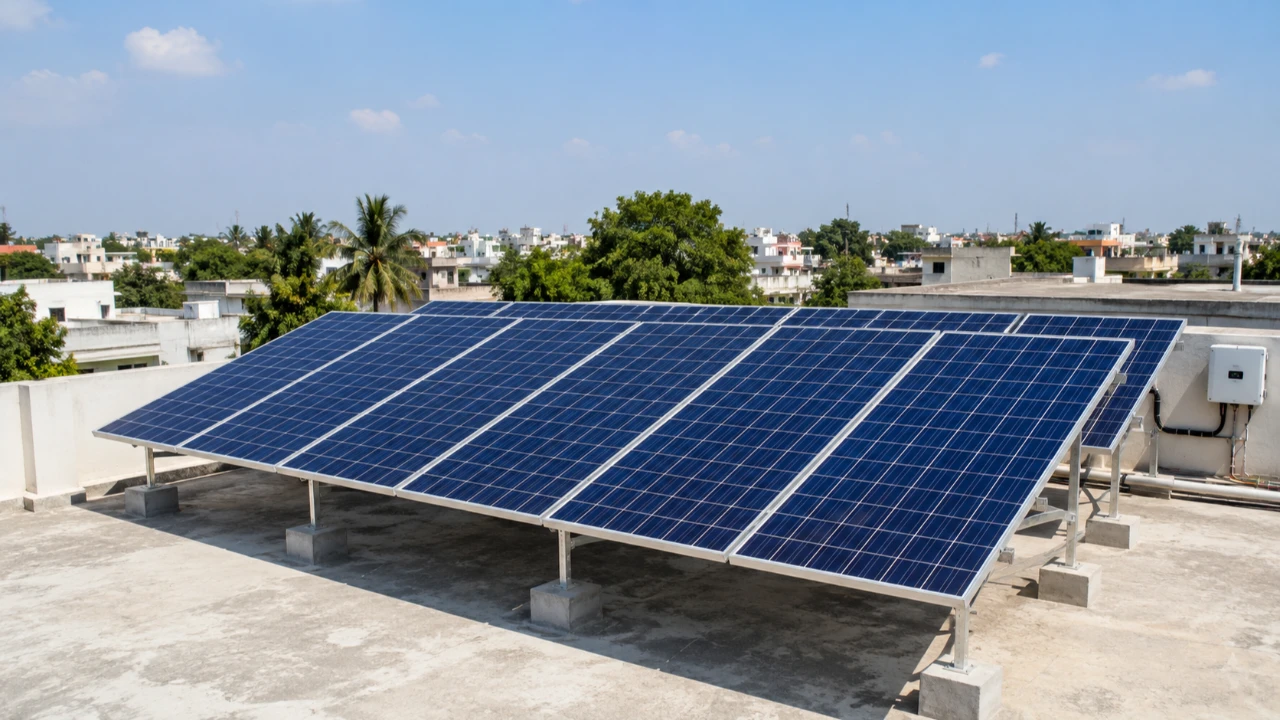
Panels help convert sunlight into electricity and are available in monocrystalline, mono-bifacial, or Tunnel Oxide Passivated Contact (TOPCon) technology, based on space and budget. - Mounting Structure
The mounting structure holds panels securely and should withstand wind, rain, rooftop exposure, and long-term outdoor conditions. - Cabling and Connectors
Cabling carries generated power from panels to the inverter, while connector quality affects safety, efficiency, and energy loss. - Solar Inverter
The inverter converts direct current power from panels into alternating current used by household appliances. - Solar Batteries
Batteries store excess power for outages or evening use, especially in off-grid and hybrid solar systems. - Charge Controller
A charge controller regulates power flowing into batteries and helps protect battery life in off-grid or hybrid systems. - Net Meter
A net meter records electricity imported from and exported to the grid under approved net metering arrangements. - Monitoring System or App
A monitoring system helps homeowners track daily generation, consumption, faults, and performance drops in real time.
Solar Panel Equipment List Homeowners Should Review
A solar panel equipment list helps buyers check the components directly linked to generation and rooftop durability. These details affect output, weather resistance, subsidy eligibility, and long-term confidence in the installed system.
- Panel Type and Wattage
Monocrystalline, bifacial, and TOPCon panels should match roof space, budget, and power expectations. - Certifications and Compliance
Certified panels support quality confidence, subsidy eligibility, and safer long-term rooftop solar performance. - Frame, Glass, and Weather Resistance
Strong frames, durable glass, corrosion resistance, and PID resistance help panels withstand Indian weather conditions. - Panel Warranty
Panel warranties should clearly state performance cover, product cover, claim process, service timelines, and replacement responsibility.
Eastman Solar Equipment Options for Indian Homes
Eastman offers a broad solar equipment list for homes, shops, rural sites, commercial rooftops, and agricultural applications. Our product range supports homeowners seeking one-stop planning with panels, inverters, batteries, and Balance of System products.
- Solar Panels
Eastman offers Domestic Content Requirement (DCR) and Non-DCR panels, including monocrystalline, mono-bifacial, and TOPCon options. - Solar Inverters
Within this solar equipment list, Eastman offers on-grid, off-grid, and hybrid inverters for savings, backup, and flexibility. - Solar Lithium Batteries
Eastman lithium batteries support hybrid systems needing efficient storage, dependable backup, and stronger long-term service value. - Solar Conventional Tubular Batteries
Eastman tubular batteries suit backup-focused solar systems where regular power cuts affect essential household electricity use. - Balance of System Products
Eastman Balance of System (BOS) kit supports safe connection, earthing, protection, and organised rooftop solar installation.
Solar Panel Installation Technician Equipment List
A solar panel installation technician's equipment list helps homeowners judge the professionalism of the installation team. Homeowners need not buy these tools, but they should expect technicians to arrive properly prepared.
- Safety Gear
Technicians should use helmets, gloves, harnesses, insulated shoes, and eyewear during rooftop and electrical installation work. - Electrical Testing Tools
Testing tools confirm polarity, insulation health, current flow, and electrical safety before final project commissioning. - Mounting and Alignment Tools
Drills, torque tools, spanners, measuring tapes, and alignment tools support accurate placement and secure panel mounting. - Cleaning and Inspection Tools
Cleaning tools and inspection checklists help technicians complete a cleaner handover and verify basic system readiness.
How to Choose the Right Solar Equipment for Your Home?
The right solar equipment list depends on consumption, roof space, backup needs, budget, and local grid reliability. Homeowners should compare the complete system value instead of comparing only the panel price or system size.
- Check Monthly Electricity Use
Review seasonal electricity bills before deciding system capacity, inverter size, battery needs, and future load planning. - Choose the Right System Type
On-grid suits bill reduction, off-grid suits long cuts, and hybrid supports both savings and backup at home. - Compare Warranty and Service Support
Compare warranty cover, service response, panel life, battery support, and post-installation help before choosing any provider. - Avoid Vague Quotations
Ask for an itemised solar equipment list covering capacities, certifications, safety devices, warranties, and service inclusions.
Planning a Solar Solution for Long-term Reliability
A complete solar equipment list extends beyond panels and inverters, covering safety devices, cabling, mounting, and monitoring components for reliability. Each part affects how safely your system operates, how reliably it performs, and how long it lasts after installation day.
For larger installations, a solar power plant equipment list includes additional components, and Eastman caters to these projects too efficiently.
Our one-stop solutions support on-grid, off-grid, and hybrid needs with 24x7 service support for households across Indian power needs. We also offer a two-hour service response time and long warranty coverage across key solar products for stronger ownership confidence.
Verifying every component protects your investment, while contacting Eastman helps you plan the right system for your property with confidence today.
Frequently Asked Questions About Solar Equipment
1. What is a solar inverter and why do I need one?
A solar power system typically includes solar panels, an inverter, mounting structures, cables, protection devices, and a monitoring system. Battery storage may also be added when backup power or greater energy independence is required.
2. What equipment is needed to install solar panels at home?
A home solar installation requires solar panels, a suitable inverter, mounting structures, DC and AC cables, earthing equipment, distribution boxes and safety devices. Eastman Solar offers solutions designed to support reliable residential energy generation.
3. Is a battery necessary for a home solar system?
A battery is not essential for an on-grid solar system, as surplus electricity can be exported to the grid where net metering applies. However, batteries are useful for backup power during outages and greater energy independence.
4. What safety equipment is required for solar panel installation?
Solar installations require DC and AC isolators, circuit breakers, surge protection devices, proper earthing, and suitable cables. Installers should also use helmets, safety harnesses, gloves and non-slip footwear while working on rooftops or electrical connections.
5. What is included in a solar panel installation kit?
A typical solar panel installation kit contains solar panels, an inverter, mounting structures, cables, connectors, earthing components and electrical protection devices. The exact items may vary according to system capacity, roof type, and installation requirements.
 78728 78728