



Introduction
Solar energy has become a practical option for homes, businesses, and properties looking to generate electricity from sunlight. Among established technologies, polycrystalline panels have been used for years because they combine a simple manufacturing process with accessible costs. However, they also have limitations, particularly when installation space is restricted or higher efficiency is a priority.
If you are comparing solar technologies, understanding how these panels work helps assess their suitability. Let's explore the meaning of polycrystalline solar panels, key benefits, limitations, and situations where this technology can still be useful.
What is a Polycrystalline Solar Panel?
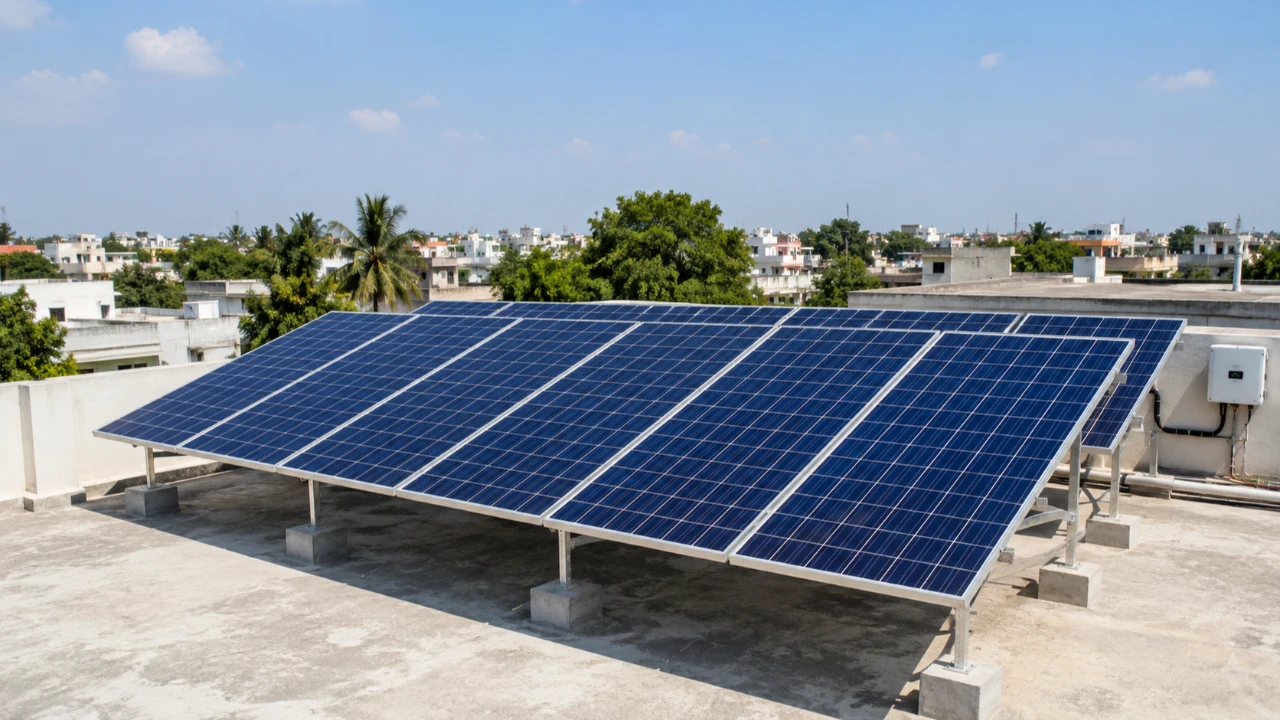
A polycrystalline solar panel is a renewable energy device constructed using multiple silicon fragments melted together into a single wafer. Unlike monocrystalline panels, which utilise a single, pure silicon crystal, the polycrystalline manufacturing technique involves pouring molten silicon into a square mould.
As the silicon cools, thousands of individual crystals form within the cell. This distinct structure creates the signature speckled, marble-like blue appearance typical of a polycrystalline PV panel.
Because the manufacturing process avoids the complex single-crystal growing procedure, a polycrystalline photovoltaic panel is significantly less resource-intensive to manufacture, leading to a more economical end product.
Pros and Cons of Polycrystalline Solar Panels
To better evaluate whether a polycrystalline solar panel aligns with your specific energy requirements, it helps to weigh its primary advantages against its limitations.
Pros
- Lower Manufacturing Cost: The simpler production process can make polycrystalline technology more cost-effective than comparable monocrystalline options.
- Less Silicon Waste: The manufacturing process can use silicon efficiently compared with processes that require cutting single-crystal wafers.
- Established Technology: Polycrystalline panels have a long history of use across residential, commercial, and larger solar installations.
- Suitable Where Space is Available: Larger rooftops, open land and other installations can accommodate additional panel area when required.
- Straightforward Design: Their blue cell appearance and established construction make them easy to identify and understand.
Cons
- Lower Efficiency: Polycrystalline cells generally convert a smaller share of sunlight into electricity than modern monocrystalline cells.
- Higher Space Requirement: Lower efficiency means more panel area may be needed to achieve the same system capacity.
- Less Suitable for Compact Roofs: Properties with limited usable roof space may benefit from higher-efficiency technologies.
- Performance in High Temperatures: Polycrystalline technology can have a lower temperature tolerance than some monocrystalline alternatives.
- Less Common in Newer Installations: The market has increasingly moved towards newer, higher-efficiency crystalline technologies.
Here is the summary table of the pros and cons of Polycrystalline Solar Panels:
Category
Pros (Advantages)
Cons (Disadvantages)
Cost & Production
Cost-effective
Lower Efficiency
Material Usage
Minimal Waste
Higher Space Requirement
Durability & Thermal Performance
Long Lifespan
Temperature Sensitivity
Aesthetics
Recognisable Look
Visual Contrast
Best Uses of Polycrystalline Solar Panels
A polycrystalline solar panel can still be useful in several applications, particularly where installation area and project requirements allow for its lower efficiency.
Large Residential Rooftops
If your property has sufficient roof area, polycrystalline panels can provide a practical way to build a solar system without requiring the highest available panel efficiency.
Commercial and Industrial Buildings
Warehouses, factories and other buildings often have larger roof surfaces. This can make a polycrystalline PV panel suitable where space is less restrictive.
Agricultural Properties
Farms, sheds and other agricultural buildings may have broad, unobstructed surfaces. This allows more panels to be installed to meet electricity needs.
Ground-mounted Systems
Open land provides greater flexibility in panel placement. A polycrystalline photovoltaic panel can therefore be considered where land availability is not a major constraint.
Budget-conscious Projects
Where initial equipment cost is an important consideration, the historically lower manufacturing cost of polycrystalline technology may make it worth comparing with other panel types.
Existing Polycrystalline Systems
If you already have a polycrystalline installation, matching replacement or additional modules may be useful, subject to compatibility with the existing system, electrical requirements, and current product availability.
Before choosing a polycrystalline solar panel, check its rated power, efficiency, dimensions, warranty, temperature coefficient, and degradation specifications. These details can vary between models and manufacturers, so comparing individual products is more useful than relying only on the panel category.
Residential Applications: Cost-effective Power for Every Home
Budget-friendly Rooftop Solution
Ideal for cost-conscious homeowners with spacious rooftops or yards, offering a balanced mix of low upfront equipment costs and steady utility savings.
Accelerated Payback Period
Lower initial hardware expenses reduce total installation costs, enabling a quicker return on your overall solar investment.
Seamless Grid Integration
Connects smoothly with grid-tied household setups, allowing you to leverage net-metering benefits and lower monthly energy bills.
Reliable Long-Term Performance
Delivers dependable, low-maintenance green power for over 25 years when paired with modern power electronics.
Choose the Right Polycrystalline Solar Panel for Your Solar Needs
Investing in the right photovoltaic system requires balancing upfront budget considerations with long-term energy goals. Now that you understand the meaning of polycrystalline solar panels and practical applications, take immediate steps towards complete energy independence.
Start by auditing your monthly electricity usage, measuring your available roof space, and requesting a professional site assessment.
At Eastman Auto & Power Limited, we provide solar Mono-bifacial, TOPCon, monocrystalline solar panels designed with quality components and advanced technologies to support efficient energy generation. Contact Eastman to explore suitable solar solutions and understand how proper system design can support long-term solar performance.
 78728 78728