



Introduction
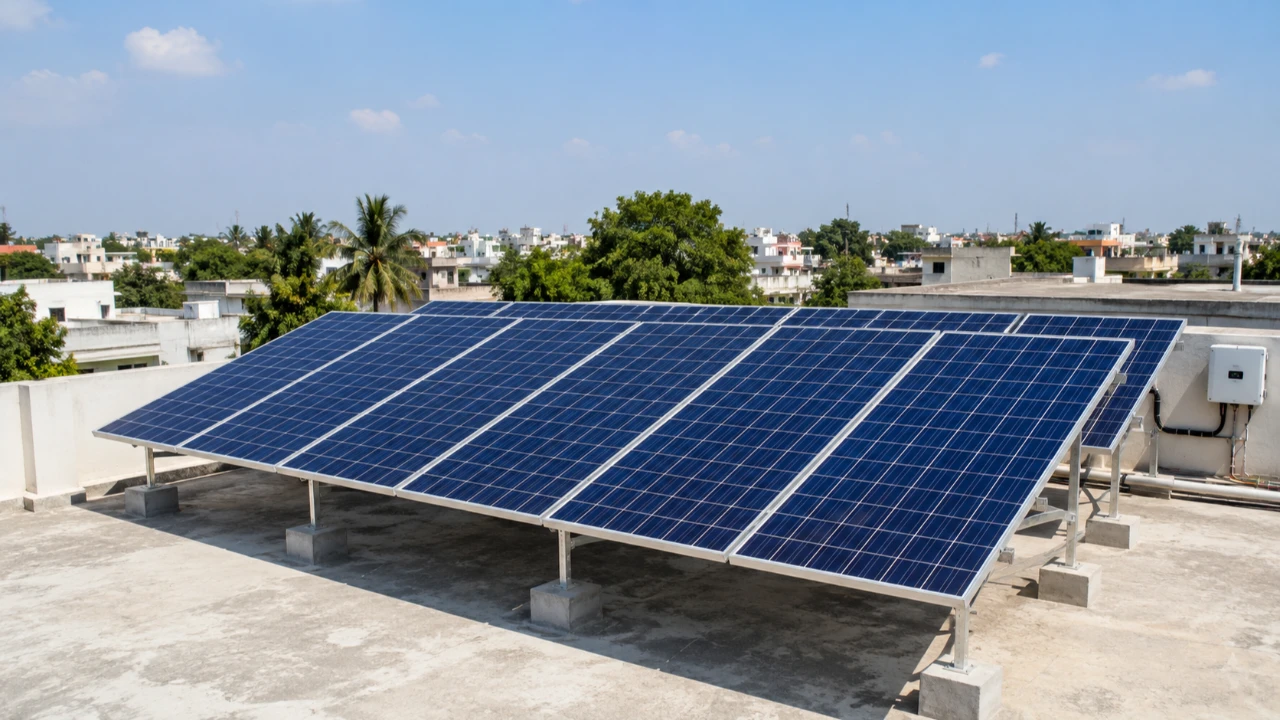
Modern homes have evolved into complex, high-tech ecosystems. From electric vehicles charging in garages to smart HVAC units and automated home appliances running continuously, household energy requirements have increased significantly. Relying only on traditional grid power or older solar configurations may not be sufficient to meet these growing demands.
This blog explains how solar panel technology improves energy efficiency, optimises power generation, and helps modern homes achieve greater energy independence.
3 Critical Reasons Modern Homes Require Better Solar Technology
Traditional solar setups were designed for lower energy consumption levels. Advanced solar panel technology helps homeowners generate more power, improve efficiency, and prepare for increasing electricity requirements for three key reasons:
- Maximising Restricted Roof Space
Modern homes often feature multi-angled roofs, skylights, or unique architectural designs that limit the available area for panel installation. Advanced solar panel technology enables higher energy generation from every square foot compared to conventional panel designs, making it suitable for space-constrained rooftops. - Mitigating Peak-time Tariffs
Utilities often charge higher rates during periods when smart appliances and electric vehicles are commonly used. Efficient solar configurations allow homeowners to generate and use power effectively during peak daylight hours, helping reduce dependence on expensive grid electricity. - Enhanced Climate Resilience
Changing weather conditions requires solar systems that can perform reliably in different environments. Modern solar panels feature advanced protective glass and frame structures designed to withstand challenging conditions, helping maintain consistent energy generation during harsh weather.
A Homeowner's Guide to Eastman Solar Panel Options
Eastman’s advanced engineering brings reliable solar panel technology solutions designed to meet different budgets, rooftop requirements, and subsidy guidelines. Here is an overview of the specialised solar panel options available for home installations:
Mono Bifacial (DCR), 500W and 550W Range
These high-capacity panels are well-suited to larger installations requiring stronger output per panel. They work particularly well across residential rooftops, government subsidy projects, schools, institutions, commercial rooftops, agricultural installations, and Engineering, Procurement and Construction (EPC) projects.
TOPCon Technology (DCR), 580W and 625W Range
Built on advanced TOPCon cell technology, these panels represent the latest solar technology, delivering higher efficiency for demanding, large-scale applications. They are ideal for residential rooftops, subsidy-linked government projects, schools, commercial rooftops, agricultural installations, and solar EPC projects across India.
Maximising Subsidies: The PM Surya Ghar Yojana
Financial planning plays an important role when installing a solar energy system for long-term household usage. Government initiatives such as the PM Surya Ghar Yojana have made solar adoption more accessible by providing financial support for eligible installations.
The scheme encourages households to adopt clean energy by offering subsidies that help reduce the overall cost of installing residential solar systems. When homeowners choose a compliant on-grid or hybrid solar energy system for home use, they can benefit from financial assistance under the programme.
To claim these benefits, selecting suitable solar equipment is essential. The scheme gives preference to installations using Domestic Content Requirement (DCR) certified modules. Choosing compliant and reliable solar panels helps homeowners meet technical requirements while accessing applicable government incentives.
Invest in a Solar Solution That Lasts
Selecting the right solar partner is as important as choosing the right system. Working with certified installation professionals helps ensure accurate site assessment, safe installation, and efficient performance across on-grid, off-grid, or hybrid setups.
At Eastman, we provide reliable solar solutions designed to support different household energy requirements with dependable performance and long-term quality. Supported by experienced engineers and 24/7 customer assistance, we help homeowners achieve a smoother installation experience and continued support.
Combined with government initiatives, a well-planned solar energy system for home usage can support long-term savings and improved energy independence.
Frequently Asked Questions
1. What is the latest technology in solar panels?
Advanced solar panel technologies include TOPCon, heterojunction, and bifacial designs. These developments improve conversion efficiency, reduce energy losses, and support better performance in varied conditions. The most suitable option depends on space, climate, budget, and energy requirements.
2. What is TOPCon technology in solar panels?
TOPCon, or Tunnel Oxide Passivated Contact, is an advanced solar cell technology that reduces electron losses through improved surface passivation. This allows solar panels to achieve higher efficiency, better low-light performance, and slower long-term degradation.
3. Are TOPCon solar panels better than traditional solar panels?
TOPCon panels generally offer higher efficiency, improved low-light performance, and lower degradation than conventional PERC panels. However, their suitability depends on installation space, energy goals, and budget, as their initial cost may sometimes be higher.
4. Are bifacial solar panels more efficient?
Bifacial solar panels can generate more electricity than conventional monofacial panels by capturing sunlight from both surfaces. Their additional output depends on ground reflectivity, mounting height, panel spacing, tilt angle, and the absence of rear-side shading.
5. Which solar panel technology is best for home use?
Monocrystalline PERC or TOPCon panels are commonly suitable for homes because they provide high efficiency within limited rooftop space. Eastman Solar can help homeowners select an appropriate technology based on roof conditions, budget, and electricity consumption.
6. What is bifacial solar panel technology?
Bifacial solar panel technology uses photovoltaic cells that absorb direct sunlight through the front and reflected light through the rear. This dual-sided design can increase total energy generation when panels are installed above reflective, unobstructed surfaces.
 78728 78728