



Introduction
If you have ever compared an inverter, battery, solar setup, or even the specifications of a household appliance, you have probably seen kW and kWh listed somewhere on the page. They also show up on electricity bills, energy calculators, and product labels, often without much explanation.
That is where the confusion usually starts. The abbreviations look almost identical, appear in similar contexts, and can easily be mistaken for the same kind of rating.
Getting familiar with kw vs kwh makes these specifications easier to read and gives you a better sense of what to look for before comparing power solutions. So, what does each rating actually tell you, and when should you pay closer attention to one over the other? Let's find out more.
What Does kW Tell You About Electrical Power?
A kilowatt, or kW, is a measure of power. One kilowatt equals 1,000 watts, and the rating tells you how much electrical power a device, appliance, or system is designed to use or deliver at a given moment.
It helps in understanding how much load a system can handle at once. kW is used to measure:
Inverter Capacity
The kW rating shows how much load an inverter can support at once. If the connected appliances exceed that capacity, the inverter may trip, overload, or fail to run the full load as expected.
Appliance Demand
Every appliance has a power requirement. High-load equipment such as air conditioners, water pumps, induction cooktops, and heaters can account for a large share of the total demand, so their ratings matter during system sizing.
Starting Loads
Some appliances need more power when they start than when they are running normally. Motors in refrigerators, pumps, and air conditioners can create a short surge, which is why checking only the regular running load may not be enough.
Solar System Capacity
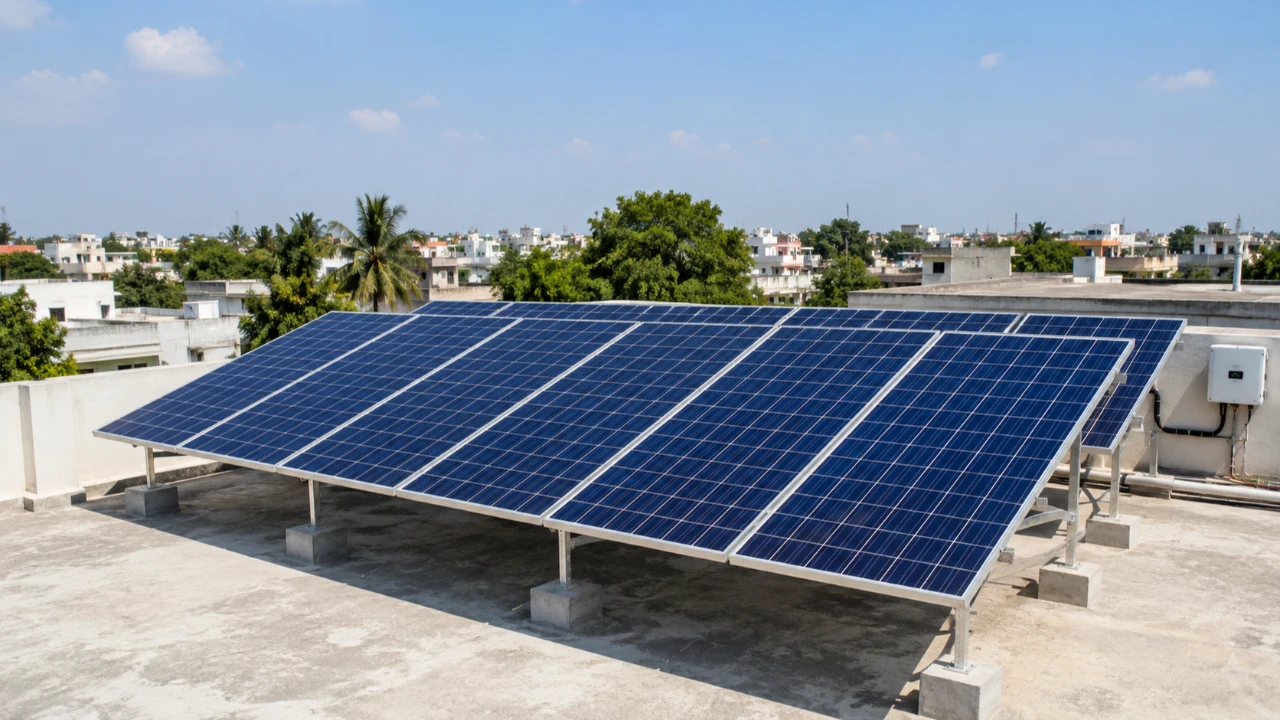
Solar installations are commonly described in kW because the figure represents their rated power capacity under defined test conditions. A 5 kW system, for example, refers to its power rating rather than how much electricity it will generate in a day.
Simultaneous Usage
The appliances you use together matter more than the total number you own. A home may have several high-power devices, but the required kW capacity depends largely on which of them are likely to run at the same time.
What Does kWh Tell You About Energy Use?
A kilowatt-hour, or kWh, is a unit of energy. It represents the energy associated with using one kilowatt of power for one hour.
Consider these examples:
- A 1 kW appliance running for one hour uses 1 kWh.
- A 2 kW appliance running for three hours uses 6 kWh.
- A 0.5 kW appliance running for four hours uses 2 kWh.
These examples make the kilowatt hour vs kilowatt distinction easier to understand. kW tells you the rate of power use, while kWh accounts for power and time.
You will commonly see kWh used for electricity consumption, solar energy generation, and battery energy capacity. So, kw vs kwh can be simplified into two questions: “How much power is required?” and “How much energy is involved over time?”
What Is the Main Difference Between kW and kWh?
The main difference between kilowatt versus kilowatt hour comes down to what each unit measures. kW tells you the rate at which power is being used, supplied, or generated at a given moment. kWh tells you how much energy is used, stored, or generated over a period of time.
| Factor | kW | kWh |
|---|---|---|
| Measures | Power | Energy |
| Tells You | How much power is needed or available at a moment | How much energy is used, stored, or generated over time |
| Commonly Seen In | Inverter ratings, appliance loads, solar system capacity | Electricity bills, battery capacity, solar generation |
| Time Involved | No | Yes |
| Simple Example | A 2 kW appliance needs 2 kW while operating | The same appliance running for 3 hours uses 6 kWh |
Another way to understand kilowatt versus kilowatt hour is through a water-flow analogy. kW resembles the rate at which water flows from a tap, while kWh resembles the total quantity collected after the tap has been running.
Pick the Right kW and kWh Rating for Your Power System
Before choosing a power solution, start with the way you actually plan to use it. List the appliances that may run together, note the expected backup duration, and check how much energy the system can realistically provide under that load.
This is where kw vs kwh difference becomes useful in practice. One rating helps you avoid undersizing the power capacity, while the other helps you judge if the available energy is enough for your expected usage.
 78728 78728