



Introduction
Solar energy is becoming a practical option for homeowners looking to reduce their dependence on conventional electricity sources. While rooftop solar systems have been widely adopted, limited roof access in apartments and smaller homes has increased interest in alternative solutions.
Balcony solar panels offer a compact approach for homes where rooftop installation may not be possible.
However, rooftop systems generally provide more space for larger installations and higher electricity generation.
Let us look at the differences between these options, which can help homeowners choose a solar solution based on available space, energy requirements, installation conditions, and long-term expectations.
What are Balcony Solar Panels?
Balcony solar panels are compact solar modules designed to be installed on balconies, railings, or other limited spaces where traditional rooftop systems may not be practical.
These systems are generally suited for smaller electricity requirements because balcony areas typically offer less installation space compared with rooftops.
A balcony solar system may include solar panels, a microinverter or inverter system, mounting equipment, and electrical connections depending on the design. The exact configuration depends on the available balcony area, sunlight exposure, and local regulations.
What is Rooftop Solar?
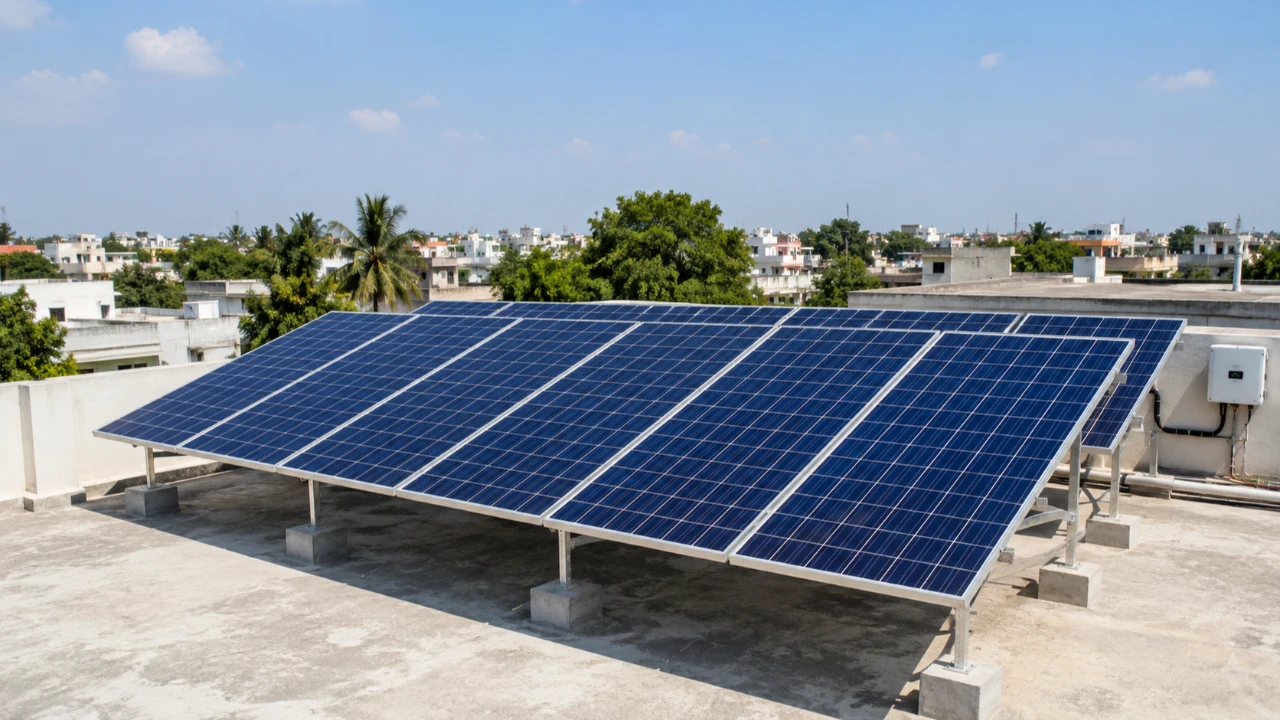
Rooftop solar refers to a solar installation placed on the roof of a residential, commercial, or apartment building. These systems usually provide more usable space for installing multiple panels, allowing higher electricity generation capacity.
Rooftop systems can be designed for:
- Individual homes
- Apartment buildings
- Housing societies
- Commercial properties
Since rooftops generally receive better exposure to sunlight and provide more installation area, they are commonly preferred for larger solar requirements.
Balcony Solar Panels vs Rooftop Solar: Key Differences
The choice between balcony solar panels and rooftop solar depends on several practical factors.
| Factor | Balcony Solar Panels | Rooftop Solar |
|---|---|---|
| Installation space | Suitable for limited areas | Requires usable rooftop space |
| System capacity | Usually suitable for smaller requirements | Can support larger systems |
| Electricity generation | Depends on balcony size and sunlight | Generally higher due to larger installation area |
| Installation complexity | Compact installation with limited components | Requires detailed system planning |
| Suitable for | Compact installation with limited components | Independent houses, societies and larger properties |
| Expansion potential | Limited by available balcony area | Easier to expand with additional rooftop space |
How Does Installation Space Affect Your Choice?
Space availability is one of the biggest factors when comparing solar options.
Homes with suitable rooftops
A rooftop installation may be preferable when there is:
- Adequate shadow-free roof area
- Structural support for mounting
- Suitable sunlight exposure
- Higher electricity consumption
Apartments with limited roof access
For apartment residents, installing a rooftop system may require housing society approvals or shared arrangements. In such cases, balcony solar panels can provide an alternative where permitted.
A solar panel for a flat balcony can be considered for residents who want to explore smaller solar solutions without relying on shared rooftop access.
What Factors Should You Check Before Choosing?
Before selecting between balcony solar panels and rooftop solar, consider:
- Available installation space
- Daily electricity consumption
- Sunlight availability
- Shading from nearby buildings or structures
- Permission requirements
- System capacity requirements
- Installation and maintenance needs
- Future electricity demand
A site assessment can help determine whether a balcony installation or rooftop system is more suitable for your home.
Which Option Provides Better Electricity Generation?
Electricity generation depends mainly on the number of panels installed, sunlight availability, panel orientation, and shading conditions.
A rooftop system usually has an advantage because it can accommodate more panels and allows better placement for capturing sunlight. Larger systems can generate more electricity and support higher household consumption.
In comparison, balcony solar installations are limited by available space. They may help offset a portion of electricity use but may not replace a larger rooftop system for homes with higher energy requirements.
Pick the Right Solar Solution for Your Home With Eastman
The choice between balcony solar panels and rooftop solar depends on your available space, electricity needs, and long-term energy goals. Balcony systems can be suitable for smaller requirements and apartments with limited installation options, while rooftop systems are generally better suited for higher electricity generation.
Evaluating sunlight exposure, system capacity, installation conditions, and expected savings can help homeowners select a suitable solar solution.
At Eastman Auto & Power Limited, we offer expert solar solutions designed for different residential requirements. Contact Eastman to explore suitable solar options based on your home’s available space, energy needs, and installation requirements.
 78728 78728