



Introduction
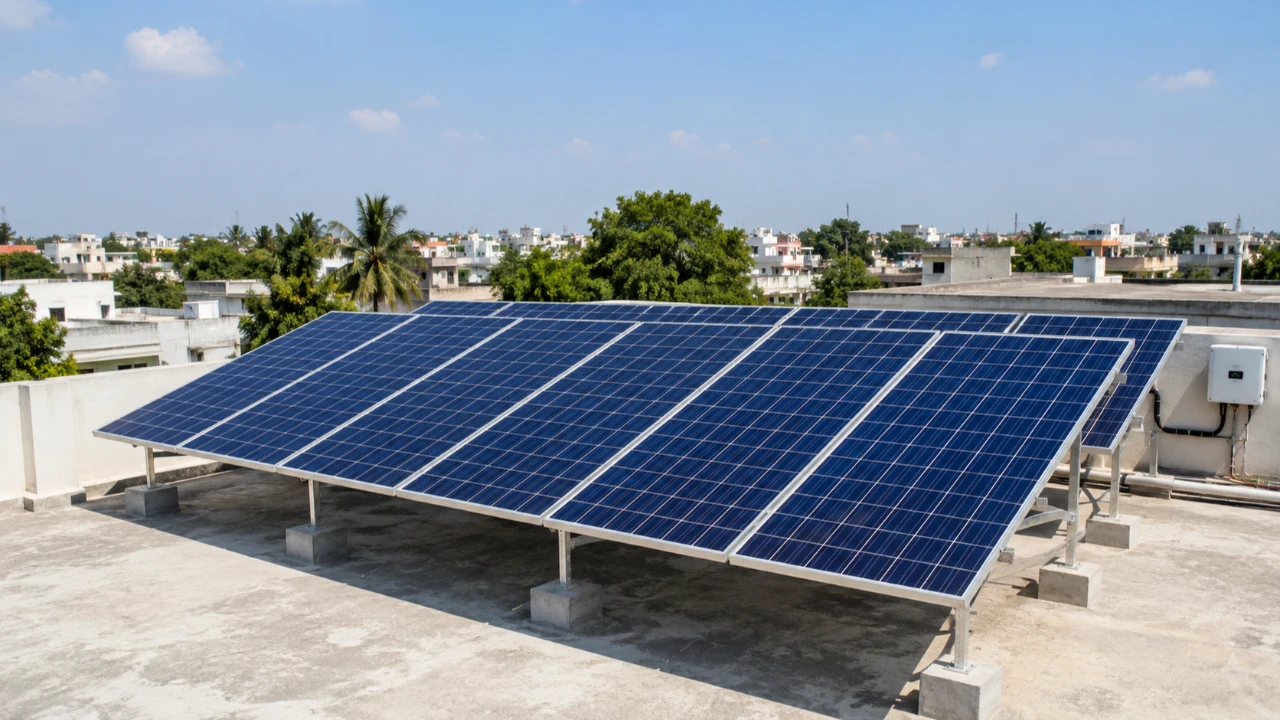
Installing rooftop solar involves more than placing panels on the roof. For your solar grid connection, the installation must also connect safely with the local electricity network so the home can use solar power and, where permitted, export surplus generation through net metering.
Applying for a solar connection therefore involves checks, approvals, installation, inspection, and metering. Knowing the sequence can help homeowners prepare documents, estimate a suitable system size, and avoid delays. Let's understand what to check before applying and how the process generally works.
Background Check Before Applying for a New Solar Connection
Before starting the application, confirm that the property and existing electricity account are suitable for a grid-connected rooftop system. The exact solar connection requirements can vary by state and DISCOM, but a few checks are commonly required.
Check Your Electricity Account
An active electricity connection and valid consumer details are usually required. The DISCOM uses these details to identify the applicant and assess the proposed installation.
Review Your Electricity Consumption
Recent electricity bills can help estimate a suitable solar system size. A system that is too small may offset only part of household consumption, while unnecessary oversizing may offer limited additional benefit where sanctioned-load or export limits apply.
Assess the Rooftop
Check usable roof area, sunlight exposure, shading, orientation, and structural condition. A well-planned rooftop solar connection should match the available installation area with the household's electricity requirement.
Check Sanctioned Load and DISCOM Rules
The proposed system capacity should be assessed against the sanctioned load and local DISCOM regulations. Rules can differ across states for system capacity, net metering, inspection, and documentation.
These checks give homeowners a clearer basis for planning the solar connection before installation begins.
How Does the Application Process Work?
The solar grid connection process generally moves from registration and feasibility approval to installation, inspection, net metering, and commissioning. Residential consumers applying under PM Surya Ghar: Muft Bijli Yojana can apply through the National Portal and follow the process applicable to their DISCOM.
Register and Submit the Application
Enter details such as the state, DISCOM, consumer number, electricity account information, and proposed system capacity. The utility then reviews the request and begins the feasibility assessment. At this point, the solar connection moves into the formal approval stage.
Obtain Technical Feasibility Approval
The DISCOM may assess the proposed capacity, sanctioned load, existing connection, and local distribution infrastructure. Homeowners should complete this approval before proceeding with installation.
Select an Eligible Vendor and Install the System
For subsidy-linked residential projects, choose an eligible or empanelled vendor as required by the scheme. Installation should follow the approved capacity and applicable technical standards.
PM Surya Ghar requires eligible residential installations claiming Central Financial Assistance to meet applicable domestic content requirements. This makes DCR eligibility important when selecting solar modules.
Submit Installation Details for Inspection
After installation, submit the completion documents and system details required by the portal or DISCOM. The utility may inspect the installation to verify safety, metering, and grid-interconnection compliance.
Complete Net Metering and Commissioning
For an on-grid system, the utility completes the required metering formalities. A bidirectional or net meter, where applicable, records electricity imported from the grid and surplus solar electricity exported to it.
Once approvals and checks are completed, the solar electricity connection can be commissioned and integrated with the household's electricity supply.
Documents You Should Keep Ready Before Applying
Good preparation can make a solar connection application easier to complete. While requirements vary between utilities, homeowners can prepare the following information in advance:
| What to Keep Ready | Why it Matters |
|---|---|
| Consumer Number and Electricity Bill | Links the application to the existing utility account |
| Identity and Address Details | Supports applicant verification |
| Proposed System Capacity | Helps with technical feasibility assessment |
| Rooftop Information | Supports site and installation planning |
| Vendor and Equipment Details | Required at relevant approval and commissioning stages |
| Bank Account Details | Needed for applicable subsidy disbursement |
Before submitting the solar connection, check that names, consumer details, system capacity, and other information are consistent across the application and supporting documents.
Under PM Surya Ghar, eligible residential households can receive Central Financial Assistance of ₹30,000 per kW for the first 2 kW and ₹18,000 per kW for the additional capacity up to 3 kW. The central subsidy is capped at ₹78,000 for systems above 3 kW.
State-level benefits can add to this support. Delhi, for example, currently provides ₹10,000 per kW for residential households, capped at ₹30,000 for a 3 kW solar plant. Always check the latest state and DISCOM conditions before applying.
How can Eastman Support an On-Grid Solar Setup?
For homeowners planning an on-grid installation, product eligibility and system compatibility become important once approvals are in place. Eastman Auto & Power Limited offers DCR solar panel options designed for eligible rooftop projects.
Its current DCR portfolio includes Mono Bifacial panels in 500W and 550W variants and TOPCon panels in 580W and 625W variants. The DCR TOPCon range is BIS and ALMM compliant, supporting installations that need to meet applicable PM Surya Ghar eligibility conditions.
This gives homeowners a clearer way to plan the solar connection journey around approved system capacity, subsidy requirements, rooftop space, and the technical design recommended by the installer.
Complete the Application with the Right Preparation
Applying for a new solar connection becomes easier when each stage is completed in the right order. Start with electricity consumption, sanctioned load, rooftop suitability, and DISCOM rules, then move through feasibility approval, installation, inspection, net metering, and commissioning.
Because procedures can vary between states and distribution companies, always check the latest portal and utility instructions before proceeding. With approvals and system planning in place, Eastman Auto & Power Limited can support homeowners with suitable on-grid solar solutions for their energy requirements.
 78728 78728