



```html
Introduction
Delhi saw a record 8,596 rooftop solar installations in 2025-26, supported by incentives and growing awareness, as the capital works towards 4,500 MW of solar capacity by 2026–27. With more households exploring rooftop systems, understanding how surplus electricity is exported and adjusted is important before installation.
Net metering lets you use solar power for your own consumption and feed excess generation into the grid. If you are considering net metering in Delhi, knowing the applicable capacity, metering, billing, and safety provisions can help you plan.
What Is Delhi Net Metering?
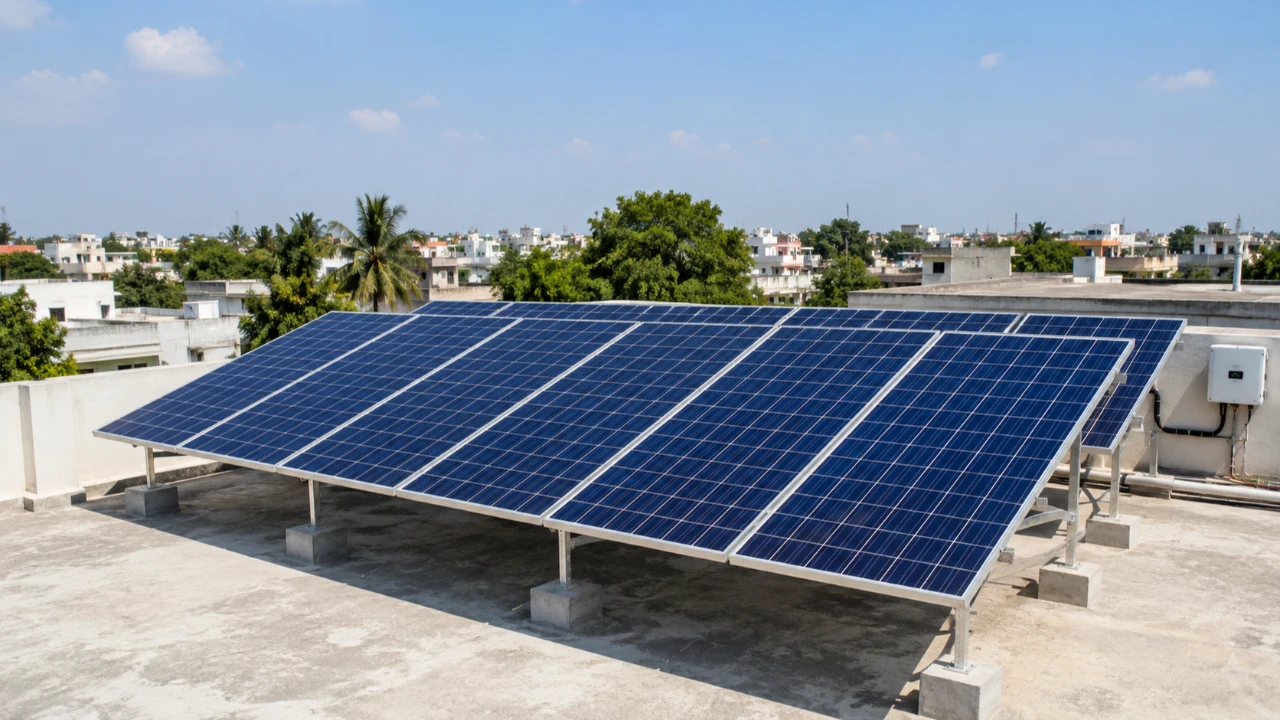
Delhi net metering allows eligible consumers with rooftop solar photovoltaic (PV) systems to use the electricity they generate for their own consumption. When the system produces more electricity than the premises need, the surplus can be exported to the grid through a bi-directional meter.
The meter records electricity imported from the grid and surplus solar electricity exported to it. Eligible energy is then accounted for in the electricity bill under the applicable Delhi Electricity Regulatory Commission (DERC) provisions.
| Stage | What Happens |
|---|---|
| Solar Generation | Your rooftop solar system generates electricity. |
| Self-Consumption | Your premises use the generated electricity first. |
| Surplus Generation | Excess electricity is exported to the grid. |
| Meter Recording | The bi-directional meter records imports and exports. |
| Energy Accounting | Eligible energy is accounted for in your electricity bill. |
Who Can Apply for a Solar Net Metering Application in Delhi?
Eligible electricity consumers can apply for rooftop solar under Delhi's net-metering framework, subject to applicable regulatory and technical requirements.
The 2026 framework provides different application routes:
- Domestic Consumers Under PM Surya Ghar: Apply through the PM Surya Ghar National Portal.
- Other Consumers: Commercial, industrial, and other eligible consumers can apply through the designated online DISCOM or Delhi State Portal.
- Domestic Consumers Outside PM Surya Ghar: They can use the applicable Delhi online application route.
Delhi also supports several solar adoption models, including Capex, Renewable Energy Service Company (RESCO), Hybrid RESCO, Community Solar, and Group Net Metering.
What Are the Current Net Metering Capacity Rules in Delhi?
The current framework permits rooftop solar systems of up to 500 kW per individual consumer connection under net metering.
However, 500 kW is the upper limit and does not mean every consumer can install a system of this size. The actual capacity depends on factors such as the sanctioned load or contract demand, existing connection, and available network capacity.
Consumers should therefore confirm the permissible capacity and connectivity conditions with the relevant DISCOM before finalising their system.
How to Apply for Net Metering in Delhi in 2026
The 2026 DERC amendment has replaced the earlier three-stage process with a two-stage online process.
Stage 1: Submit the Online Application
Submit your application through the applicable online portal. Where a technical feasibility assessment is required, the DISCOM must complete it within 15 days of receiving a complete application.
For domestic rooftop solar systems up to 10 kW on the same supply type, a technical feasibility assessment is not required. Domestic consumers installing rooftop solar systems up to 10 kW are also exempt from application and registration charges under the amended guidelines, regardless of whether they participate in PM Surya Ghar.
The connection agreement is now executed digitally, removing the requirement for a separate physical agreement.
Stage 2: Installation and Connectivity
After installing the system, submit the required documents online. The DISCOM then verifies the documents, inspects and tests the system, installs the net meter, and grants connectivity.
Stage II is generally completed within 10 days of the required electronic submission. For systems above 10 kW, the overall DISCOM timeline up to connectivity is capped at 25 days, excluding the consumer's installation or rectification time.
What Meters Are Required for Rooftop Solar?
A grid-connected rooftop solar system uses metering equipment to measure generation and electricity exchanged with the grid.
| Meter | Purpose |
|---|---|
| Solar Generation Meter | Measures electricity generated by the rooftop solar system. |
| Bi-directional Meter | Records electricity imported from and exported to the grid. |
The exact metering arrangement and equipment specifications depend on the applicable DISCOM requirements. The earlier claim about a separate check meter being mandatory above 20 kW should not be treated as a blanket 2026 requirement.
How Does Delhi Solar Net Metering Billing Work?
Net metering accounts for electricity consumed from the grid and eligible electricity exported by your rooftop solar system.
If solar generation is lower than your consumption, you import the balance from the grid. If generation exceeds your immediate requirement, the surplus is exported and recorded by the bi-directional meter.
The basic process is:
- Solar Generation: Your system produces electricity.
- Self-Consumption: Your premises use the available solar power.
- Grid Import: Additional electricity is drawn when required.
- Grid Export: Surplus electricity is sent to the grid.
- Energy Accounting: Imports and exports are accounted for under applicable DERC provisions.
The treatment of surplus electricity and settlement should be checked against the latest DERC and DISCOM provisions.
What Are the Current Safety and Connectivity Requirements?
Rooftop solar systems must meet applicable electrical safety and grid-connection requirements.
Key requirements include:
- Grid Protection: Appropriate protection equipment for safe operation.
- Anti-Islanding: Preventing the system from energising the grid during an outage.
- Automatic Isolation: Disconnecting the system under specified conditions.
- Inverter Compliance: Using equipment that meets applicable technical standards.
- Earthing and Protection: Proper earthing and electrical protection.
- Grid Compatibility: Ensuring the system is suitable for the existing connection.
The 10 kW feasibility exemption simplifies the application process but does not remove applicable safety and technical requirements.
What Changed for Delhi Solar Consumers in 2026?
Delhi's rooftop solar framework has undergone significant changes in 2026. The second amendment to the Delhi Solar Energy Policy was notified on 17 September 2026.
Revised State Subsidy
Eligible residential consumers can receive Delhi state capital subsidy support of up to ₹26,000 per kW, subject to a maximum of ₹78,000.
For eligible residential systems, the subsidy applies up to 3 kW, with the maximum state support capped at ₹78,000.
Eligible consumers can also receive central financial assistance under PM Surya Ghar, subject to the scheme's conditions.
Change in Generation-Based Incentive
The revised policy changes the earlier Generation-Based Incentive (GBI) arrangement. The Delhi Solar Portal states that capital subsidy or GBI applications are currently applicable only to net meters installed before 17 September 2026.
Therefore, older GBI figures should not be used when describing the incentives available for new installations under the revised policy.
New Solar Adoption Models
Delhi now provides multiple ways to adopt rooftop solar:
- Capex: The consumer purchases and owns the system.
- RESCO: A service provider owns and operates the system.
- Hybrid RESCO: Combines RESCO and DISCOM-based arrangements.
- Community Solar: Enables participation without requiring an individual rooftop.
- Group Net Metering: Allows eligible consumers to use surplus generation across multiple connections, subject to applicable rules.
These changes combine simpler net-metering procedures with revised financial support and more flexible solar adoption models.
Understand Delhi Net Metering and Plan Your Solar Installation
Understanding the applicable metering, billing, capacity, and safety requirements can help you plan your rooftop solar installation with greater clarity. Before proceeding, check the latest provisions and DISCOM requirements for your connection.
If you are exploring rooftop solar solutions, at Eastman, we offer on-grid and hybrid options to suit different household energy needs. Explore our solar solutions and choose an option that aligns with your electricity consumption and backup requirements.
```
 78728 78728