



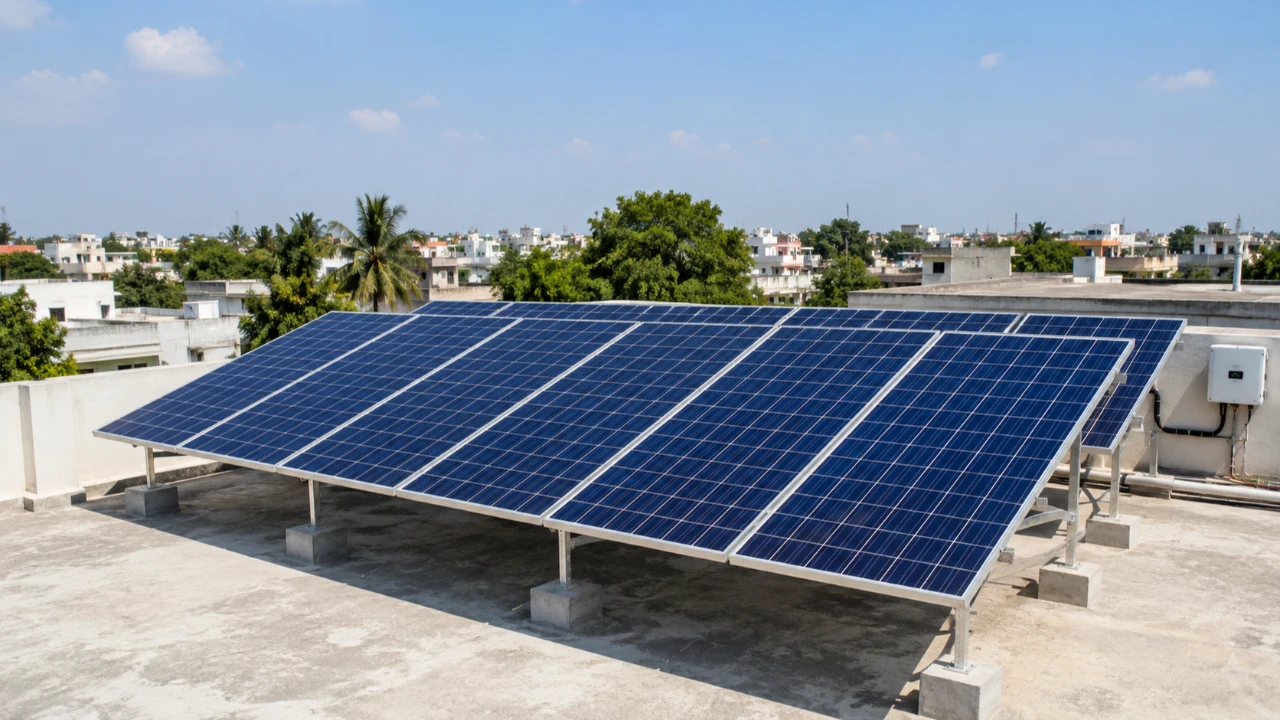
Introduction
Solar energy can help village households generate electricity from an abundant natural resource while reducing their dependence on conventional power sources. The Ministry of New and Renewable Energy (MNRE) states that most parts of India receive around 4–7 kilowatt-hours (kWh) of solar energy per square metre (m²) per day, highlighting the country’s strong solar potential. The ministry also notes that decentralised, off-grid solar applications can benefit rural areas, helping meet cooking, lighting, and other energy needs.
Choosing a solar panel in village homes requires more than selecting panels based on capacity. You also need to consider household electricity consumption, available installation space, sunlight exposure, battery requirements, and the type of solar system that suits your needs.
Why Are Solar Panels Useful for Village Homes?
Village homes can benefit from solar energy in several practical ways. A well-planned system can generate electricity for everyday appliances and support households that experience interruptions in grid supply.
Key benefits include:
- Reduced Dependence on Grid Electricity: Solar generation can provide an alternative source of household power.
- Backup Support: Systems with batteries can store energy for use when grid electricity is unavailable.
- Lower Electricity Expenses: Generating part of your household electricity through solar can help reduce dependence on purchased power.
- Clean Energy Generation: Solar produces electricity without relying on conventional fuel-based generation at the point of use.
- Flexible Applications: Solar can support lighting, fans, household appliances, and other electrical loads depending on system capacity.
How to Choose a Solar System for a Village Home?
The right solar system starts with understanding how much electricity your household actually uses. For households exploring solar power for villages, assessing daily energy requirements can help determine the appropriate system capacity and battery needs.
Assess Your Electricity Consumption
Review your monthly electricity consumption and identify the appliances you use regularly. This can help determine the capacity required for your home. A 2–3 kW system may suit many average homes, but the appropriate capacity depends on individual electricity requirements.
Consider Available Space
Check whether your roof or another suitable area has enough space for the panels. The installation location should receive direct sunlight and remain free from significant shade caused by trees, water tanks, or nearby structures.
Evaluate Battery Requirements
If backup power is important, consider the battery capacity required for your essential loads. The battery should be compatible with the inverter and overall system configuration.
How to Install a Solar Panel in a Village Home?
Installing a solar system involves several steps, from evaluating energy requirements to testing the completed setup.
Evaluate Household Usage
Start by checking your monthly electricity consumption and identifying the appliances that need to be powered. This provides a basis for deciding the system capacity.
Assess the Installation Location
Choose a roof or ground area with good exposure to direct sunlight. Avoid locations where trees, tanks, buildings, or other structures create significant shadows.
Install the Mounting Structure
The mounting structure should be securely fixed to the roof or ground. The installation angle should be selected to support effective sunlight exposure based on the site's requirements.
Mount the Solar Panels
Once the structure is secured, the panels can be fastened using suitable mounting hardware. Adequate space should be maintained around the panels to allow airflow.
Connect the Wiring and Inverter
The panels are connected to the solar inverter and, where applicable, the battery system. The setup is then connected to the home's distribution board using appropriate electrical connections.
Test the System
Before the system is put into regular operation, the installation should undergo safety and power-output checks. This helps confirm that the components are connected correctly and the system is functioning as intended.
What Type of Solar System Works for Rural Homes?
The right system depends on the home's electricity needs and the reliability of the local grid. Rural solar energy solutions can include different configurations depending on whether the household needs grid connectivity, battery backup, or independent power generation.
Off-Grid Solar System
An off-grid system can be considered when a home needs to operate independently of the grid. It generally requires battery storage to retain generated electricity for later use.
Hybrid Solar System
A hybrid system can provide another option by combining solar generation, battery storage, and grid connectivity. This can be useful for households that want solar generation along with backup support.
Grid-Connected Solar System
Grid-connected systems can also be considered where grid electricity is available and suitable for the household's requirements. The choice should be based on actual consumption, available space, backup needs, and the intended use of the system.
What Factors Should You Consider Before Installation?
Several practical factors can affect the performance and suitability of a solar system.
Roof or Ground Suitability
The installation surface should be structurally suitable for the mounting arrangement and provide sufficient space for the required panels.
Sunlight Exposure
Direct sunlight is important for solar generation. Before installation, check for shadows from trees, buildings, water tanks, or other nearby structures.
System Capacity
The system should be sized according to household electricity consumption rather than selecting a capacity without assessing the actual load.
Battery Requirements
Homes that require electricity during grid interruptions may need battery storage. The required capacity depends on the appliances and loads that need backup.
Wiring and Electrical Connections
The wiring, inverter, battery, and distribution board should be appropriately connected as part of the complete system. Installation should include suitable safety and performance checks.
How to Maintain Solar Panels in Rural Areas?
Regular maintenance can help keep a solar system operating effectively.
- Clean the panels periodically to remove accumulated dust and dirt.
- Check the panels and mounting structures for visible issues.
- Inspect wiring and electrical connections at suitable intervals.
- Arrange periodic checks of the inverter and other system components.
- Monitor system performance to identify unusual changes in generation.
The maintenance requirements can vary according to the system configuration and installation conditions.
Planning Solar for Rural Homes
Choosing solar panels for rural areas requires careful consideration of household electricity needs, available installation space, sunlight exposure, backup requirements, and system type. Eastman Auto & Power Limited offers solar equipment such as panels, inverters, batteries, and balance-of-system components that can support different residential solar configurations.
For a village home, the right setup starts with assessing the household load and site conditions. Eastman can help you consider suitable system components based on your requirements, while ensuring the panels, inverter, battery, and electrical connections work together as part of the overall installation.
 78728 78728