



Introduction
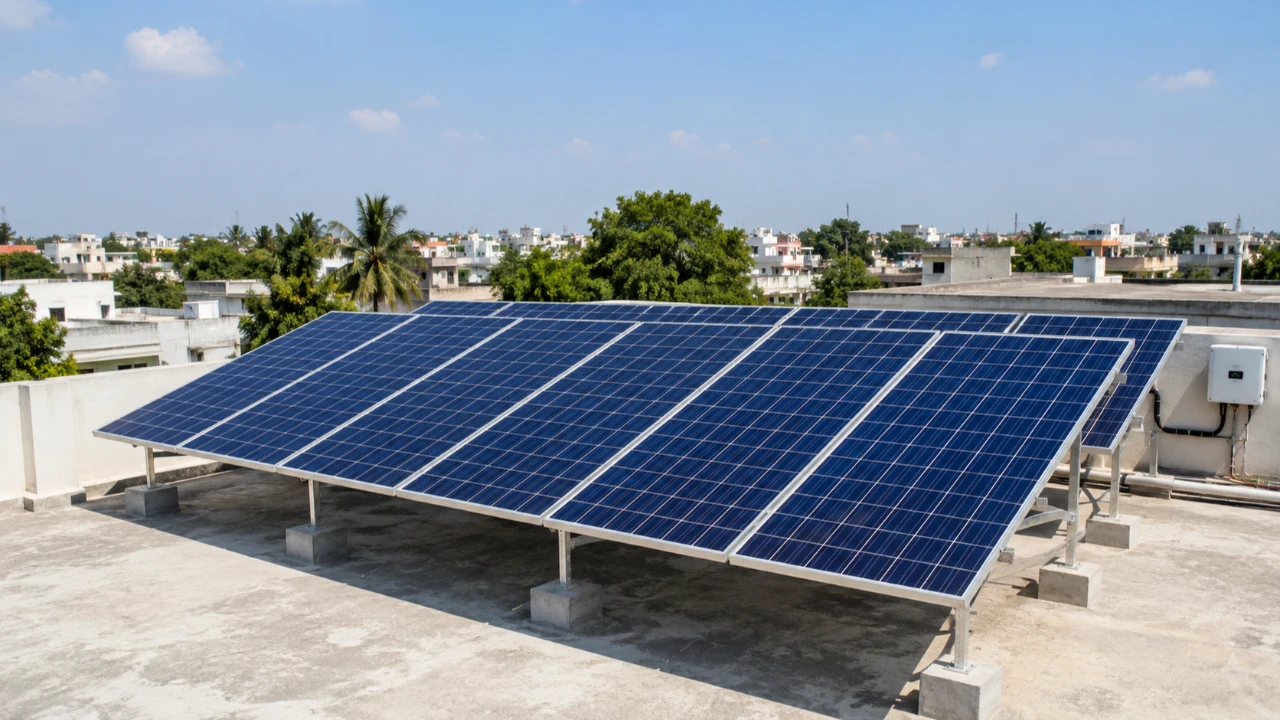
Electricity bills can become a significant household expense as daily consumption increases. Rooftop solar offers a practical way to generate electricity where it is used and reduce the amount of power purchased from the grid. A grid connected Photovoltaic (PV) system allows homeowners to do this while remaining connected to the electricity network.
For a property with suitable rooftop space and regular grid access, this setup can help turn daytime sunlight into usable electricity and reduce monthly power costs.
Let us understand how a grid connected PV system works, where the savings come from, and what to consider before installation.
What is a Grid Connected PV System?
A grid connected photovoltaic system is a rooftop solar setup that remains connected to the local electricity grid. It generally includes solar panels, a grid-tie inverter, mounting structures, protection equipment, and an appropriate metering arrangement.
The panels generate Direct Current (DC) electricity from sunlight, while the inverter converts it into AC electricity that household appliances can use. When generation exceeds immediate consumption, surplus electricity may be exported to the grid through an applicable metering arrangement.
When solar generation is insufficient, the property can draw electricity from the grid. This makes the system suitable for homes that want to generate solar power without disconnecting from their existing electricity supply.
What Components Does the System Need?
Each component has a specific role in converting sunlight into usable electricity and connecting the property safely to the grid.
| Component | Purpose |
|---|---|
| Solar PV Panels | Convert sunlight into DC electricity |
| Grid-tie Inverter | Converts DC into Alternating Current (AC) electricity and synchronises with the grid |
| Mounting Structure | Holds the panels securely in the required position |
| Protection Equipment | Helps protect the system and electrical connection |
| Bi-directional Meter | Records electricity imported from and exported to the grid, where applicable |
Unlike a battery-based system, a standard on-grid setup does not require battery storage for its basic operation.
How Does a Grid Connected PV System Work?
A grid connected solar PV system follows a straightforward energy flow:
- Solar Panels Generate Electricity: The PV modules convert sunlight into DC electricity.
- The Inverter Converts the Power: The grid-tie inverter converts DC electricity into AC electricity for household use.
- The Property Uses Solar Power: Available solar electricity supplies connected appliances.
- Surplus Electricity is Exported: Excess generation can flow to the grid where an approved metering arrangement allows it.
- The Grid Supplies the Balance: When solar generation does not meet demand, electricity is drawn from the grid.
The system therefore uses solar generation when available while retaining the grid as a source of electricity.
What Happens to Excess Solar Power?
When a grid tied PV system produces more electricity than the property is using at that moment, the surplus can be exported to the grid where permitted.
The applicable metering arrangement records electricity flowing between the property and the grid. The exact mechanism and settlement rules depend on the relevant state electricity regulator and Distribution Company (DISCOM).
Homeowners should check local requirements before installation because net metering procedures and eligibility can vary by location.
What are the Benefits of Going On-Grid?
A grid connected PV system can offer several practical advantages for properties with suitable grid access:
- Lower Electricity Purchases: Solar generation can offset part of the electricity bought from the grid.
- No Battery Requirement: A standard on-grid setup does not require battery storage.
- Direct Daytime Consumption: Solar electricity can be used directly when the panels are generating power.
- Surplus Utilisation: Excess electricity can be exported where permitted.
- Subsidy Support: Eligible residential rooftop installations can receive applicable Central Financial Assistance (CFA).
Under PM Surya Ghar: Muft Bijli Yojana, residential consumers can receive Central Financial Assistance of ₹30,000 per kW for the first 2 kW and ₹18,000 per kW for the additional 1 kW. This takes the maximum central assistance to ₹78,000 for a 3 kW system, with no additional CFA for capacity above 3 kW, subject to the scheme's conditions.
How Does Eastman Support On-grid Solar Installations?
At Eastman, we provide an on-grid solar solution designed to help homeowners generate electricity and reduce their dependence on grid power.
Our solution includes grid-tie inverters and solar panels, along with supporting components required for a complete installation. Our grid-tie inverters come with a 10-year warranty, while our solar panels carry a 30-year warranty, subject to applicable terms and conditions.
We also provide 24x7 service support with a 2-hour service response time, helping customers access support after installation. Our on-grid solutions are designed around reducing electricity costs, with eligible installations able to benefit from applicable government subsidy support.
Is an On-grid Solar System Right for Your Home?
A grid connected solar system is designed for properties with access to the electricity grid. However, homeowners should understand an important limitation: a standard grid-connected inverter does not provide backup during a grid outage. It shuts down when the grid goes down as part of its safety operation.
Consider these factors before installation:
| Requirement | What to Check |
|---|---|
| Grid Reliability | How consistent is your local electricity supply? |
| Daytime Consumption | How much electricity can your home use while solar is generating? |
| Roof Space | Is there enough suitable area for the required capacity? |
| Shading | Could trees, buildings, or other structures affect generation? |
| Electricity Consumption | What system size matches your recent bills? |
| Local Requirements | What metering and DISCOM procedures apply to your property? |
If uninterrupted backup is a priority, a hybrid or off-grid system may be worth considering instead.
Choose the Right Grid Connected Solar Solution for Your Home
A grid connected PV system can help homeowners use solar power during the day, reduce electricity purchases, and make better use of available rooftop space. The right system size, however, depends on your consumption, roof conditions, solar potential, and local grid requirements.
Reviewing your recent electricity bills and assessing your rooftop before installation can help you determine a practical system capacity. It is equally important to understand the applicable metering process, subsidy eligibility, and installation requirements for your location.
At Eastman, we offer grid-tie inverters and solar panels, supported by long-term warranties and service support, to help homeowners set up an on-grid solar solution around their electricity needs. Planning to switch to rooftop solar? Contact Eastman to explore an on-grid solution suited to your home and understand the next steps for installation.
 78728 78728