


Introduction
Among panel wattages, battery capacities, and system setups, one fundamental concept dictates how your entire arrangement functions: AC vs DC in solar system setups.
Both DC and AC play crucial roles in capturing, storing, and utilising clean energy. Learning about the difference between AC and DC in solar configurations helps you design a system tailored to your energy needs, whether you are powering an off-grid cabin or cutting grid reliance at home.
What is DC Power in Solar Systems?
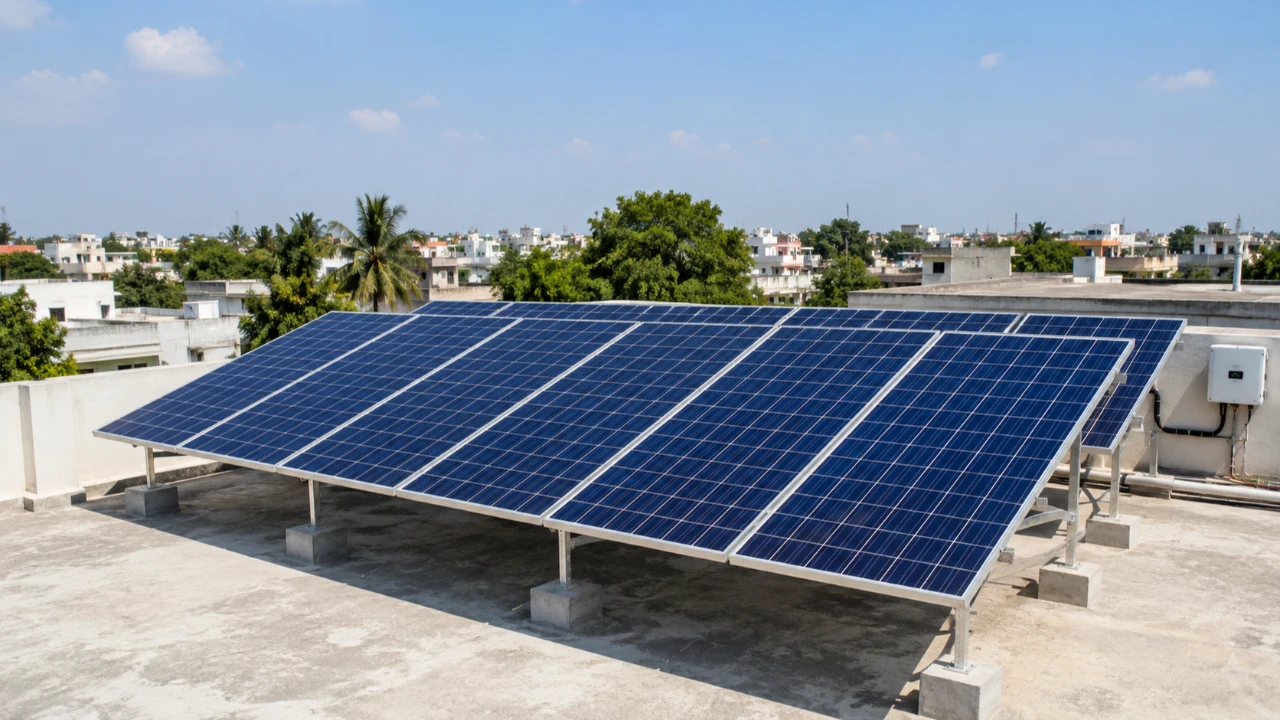
Direct Current (DC) is electrical current that flows continuously in a single, fixed direction. It is the raw form of electricity generated naturally by photovoltaic (PV) solar panels when sunlight strikes silicon cells.
In a standard setup, DC power in solar system architecture flows directly from the panels through charge controllers and into your storage bank. Solar batteries—including high-performance gel, deep-cycle tubular, and advanced lithium-ion models—store power exclusively in DC form.
Key characteristics of DC power:
- Uni-directional Flow: Current travels along a straight path without changing direction.
- Storage-friendly: Chemical energy in solar batteries charges directly from DC power.
- Efficiency at Source: Generating and capturing DC incurs low initial conversion losses.
What is AC Power in Solar Systems?
Alternating Current (AC) is electrical current that periodically reverses direction, oscillating back and forth at a standard frequency (typically 50 Hz). AC is the form of electricity transmitted across national power grids and supplied through standard household wall sockets.
Most everyday household appliances, from refrigerators and televisions to washing machines and air conditioners, require AC electricity to operate safely and efficiently. Therefore, relying solely on DC power in solar system configurations limits your ability to run ordinary domestic electronics.
To bridge this gap, an essential component, the solar inverter, converts direct current into AC power in solar system installations.
Key Differences: AC vs. DC in Solar Systems
Knowing the difference between AC and DC in solar power applications comes down to how each current moves, is converted, and powers loads:
| Feature | DC Power | AC Power |
|---|---|---|
| Current Flow | Uni-directional (one direction) | Bi-directional (oscillates back and forth) |
| Generation Source | Solar panels & chemical batteries | Grid power & solar inverters |
| Transmission Range | Best for short distances (high loss over distance) | Highly efficient for long-distance transmission |
| Appliance Compatibility | DC micro-loads (LED lights, small USB devices) | Standard home appliances & industrial machinery |
| Storage Capability | Direct storage in batteries | Cannot be stored directly (must convert to DC) |
How AC and DC Work Together in a Complete Solar Setup
Rather than competing against each other, both currents work in tandem. In an optimised system, AC and DC in solar power system designs handle distinct stages of the energy journey:
- Generation: Solar panels absorb sunlight and produce direct current.
- Storage: The DC power in solar system setups moves into solar batteries for backup power.
- Conversion: A solar hybrid or off-grid inverter transforms the stored DC into AC power in solar system lines.
- Consumption: AC electricity flows through your consumer unit to safely run home appliances.
High-performance Solar Engineering with Eastman Auto & Power Limited
Achieving maximum efficiency between AC conversion and DC storage requires robust hardware built to withstand continuous charge cycles. Eastman Auto & Power Limited provides complete solar power ecosystems designed to eliminate conversion bottlenecks and deliver reliable power:
- Eastman Solar Inverters: Engineered with high-efficiency MPPT charge technology, Eastman hybrid and off-grid inverters seamlessly convert DC into clean AC power, minimising energy loss during conversion.
- Eastman Solar Batteries: Featuring advanced deep-cycle tubular and lithium-ion solutions, Eastman batteries store DC power efficiently to ensure steady backup during grid outages or nighttime hours.
By pairing Eastman's ultra-reliable solar inverters with their long-life energy storage systems, home and business owners ensure high conversion efficiency and uninterrupted power supply year-round.
Managing AC & DC Flow via App
Modern solar architecture eliminates the guesswork through smart monitoring technology. Using dedicated platforms like the Eastman ONE App, homeowners can view their entire power workflow directly from a smartphone:
- Generation Tracking: Monitor exactly how many kilowatt-hours of DC power in solar system arrays are generated throughout the day.
- Storage Management: Check battery charge percentages and health stats to ensure your DC backup reserve remains optimal.
- Load Allocation: Track household consumption of AC power in solar system lines in real time to spot energy-hungry appliances and optimise daily consumption habits.
Choose the Right Solar System for Your Needs
Every effective solar installation relies on a balanced combination of direct and alternating current. Panels generate DC, batteries store DC, and inverters supply AC to keep your home running smoothly.
Selecting high-quality inverters and battery storage, manufactured by Eastman Auto & Power Limited, ensures that energy conversion losses remain minimal and your solar investment delivers optimum performance for decades.
 78728 78728