



 January 10, 2026 / Solar Panel
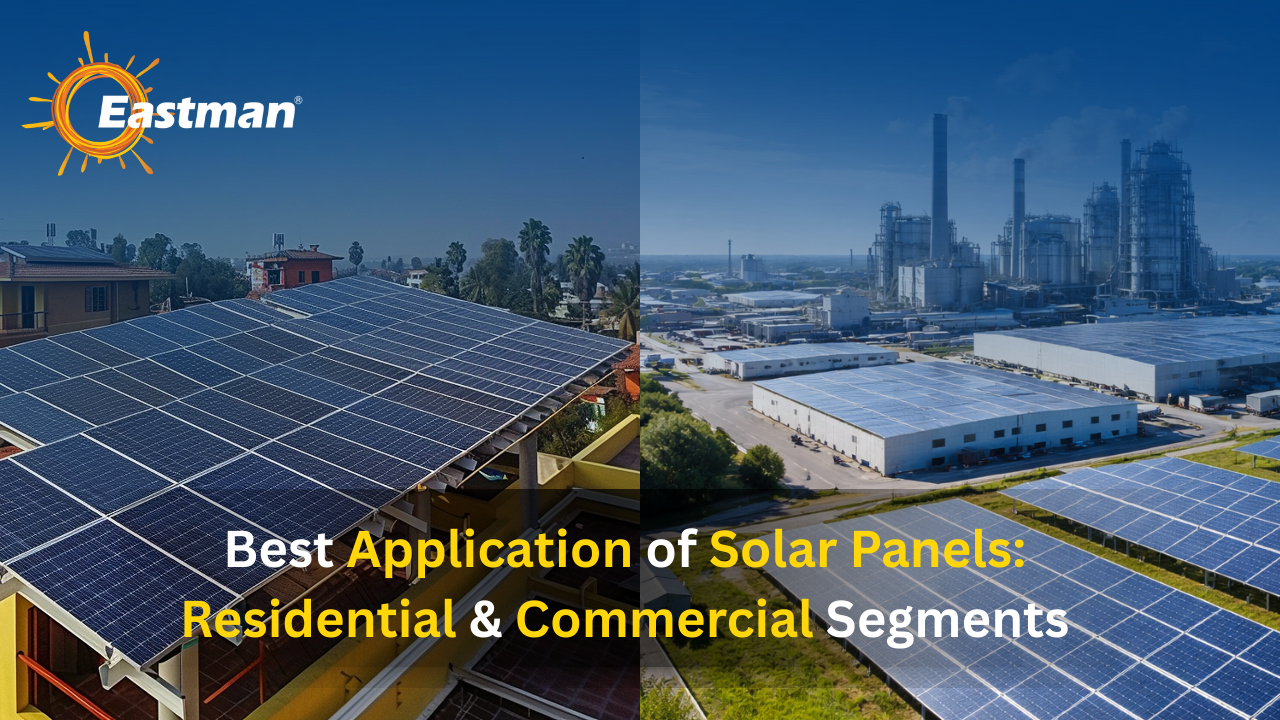
 Best Applications of Solar Panels: Residential & Commercial Segments
As solar energy becomes a central pillar of the global transition toward sustainability, both homeowners and businesses are increasingly evaluating how to invest wisely in solar technology. Rising electricity costs, grid reliability concerns, and long-term energy planning have accelerated adoption across residential and commercial segments.
Solar panels today are no longer limited to niche applications. They are scalable, efficient, and adaptable, capable of powering individual homes as well as large commercial operations. This guide explores the best applications of solar panels in residential and commercial environments, highlighting system benefits, real-world use cases, and selection considerations, with Eastman solar panels referenced as an industry-aligned solution.
Whether you are exploring solar for the first time or planning an upgrade in 2026 and beyond, this blog provides a clear, practical framework for decision-making.
Why are solar panels ideal for residential & commercial use
Modern solar panels are engineered to perform efficiently across diverse operating environments, making them suitable for both homes and businesses.
Key industry advantages include:
1. High energy yield per square meter
2. Reliable performance across varying climatic conditions
3. Compatibility with grid-connected and hybrid system architectures
4. Long operational lifespan with low degradation rates
5. Seamless integration with modern inverter technologies
These characteristics make solar panels a dependable energy solution for a wide range of applications.
Residential vs Commercial: Use, Types, Benefits
1. Residential Applications of Solar Panels
Residential solar is one of the fastest-growing segments globally. Increasing awareness of energy independence, sustainability, and long-term cost control has made solar a mainstream choice for homeowners.
Why Homeowners Choose Solar Panels-
1. Reduced Electricity Bills: On-site solar generation significantly lowers dependence on grid-supplied electricity.
2. Energy Independence: Homeowners gain greater control over energy consumption and protection against tariff fluctuations.
3. Environmental Benefits: Solar power reduces carbon emissions and supports cleaner living.
4. Improved Property Value: Homes equipped with solar systems are often more attractive to buyers and investors.
Solar panels deliver consistent performance, making them suitable for residential rooftops, open yards, and remote properties.
Types of Residential Solar Installations-
1. Roof-Mounted Solar Systems: The most common residential application, ideal for:
1. Homes with suitable roof orientation and structure
2. Limited ground space
3. Standard grid-connected configurations
Panels are installed at optimized tilt angles to maximize year-round solar exposure.
2. Ground-Mounted Residential Systems: Used where roof space is limited or shading is present, offering:
1. Flexible system layout
2. Easier access for maintenance
3. Improved design optimization
These systems are particularly suitable for larger residential plots and rural properties.
3. Hybrid Residential Solar Systems: Hybrid solar systems combine solar generation with advanced energy management capabilities. Benefits include:
1. Power availability during grid interruptions
2. Improved energy utilization efficiency
3. Better control over peak consumption periods
Eastman solar solutions are designed to integrate smoothly with hybrid system architectures, ensuring stable performance.
Key Residential Benefits-
1. Lower Monthly Energy Costs: Generating electricity on-site reduces dependence on utility power and can significantly lower long-term energy expenses.
2. Energy Security: Hybrid residential systems enhance reliability, providing continuous power during grid instability.
3. Long-Term Asset Value: Solar installations are increasingly factored into property valuations, improving resale potential.
2. Commercial Applications of Solar Panels
Commercial solar systems differ from residential installations in both scale and design objectives. The focus is on energy cost optimization, return on investment, and operational reliability.
Solar panels used in commercial environments must support higher loads, extended operating hours, and scalable expansion.
Why Businesses Are Adopting Solar-
1. Reduced operating expenses
2. Predictable long-term energy costs
3. Alignment with corporate sustainability goals
4. Improved energy resilience
Solar adoption has become a strategic decision for businesses across industries.
Key Commercial Solar Use Cases-
1. Warehouses and Industrial Facilities: Ideal due to:
1. Large available roof or ground area
2. High and consistent energy demand
3. Long operating hours
Solar systems in these environments deliver high energy output with minimal ongoing maintenance.
2. Retail and Office Complexes: Benefits include:
1. Reduced daytime electricity costs
2. Improved sustainability credentials
3. Offset of peak daytime energy consumption
Solar installations also enhance corporate branding and environmental responsibility.
3. Hospitality Sector: Hotels and resorts operate with continuous energy demand. Solar systems help:
1. Lower operational costs
2.Reduce environmental impact
3. Improve reliability and guest experience
Eco-conscious energy use also supports brand reputation in the hospitality industry.
Commercial solar systems typically offer:
1. Faster payback periods
2. Higher total energy generation
3. Strong long-term return on investment
Payback timelines commonly range from 3 to 7 years, depending on system size, usage patterns, and regional incentives.
Commercial solar installations can be tailored to specific operational needs, including:
1. Modular system expansion
2. Multiple array configurations
3. Smart monitoring and performance analytics
Large-scale systems often include centralized monitoring platforms to ensure consistent output and predictive maintenance.
Residential vs Commercial Solar: Key differences
Feature | Residential Solar | Commercial Solar |
System Size | Small to medium | Medium to large |
Customization | Moderate | High |
ROI Period | 5-10 Years | 3-7 years |
Load Profile | Household usage | Business operations |
Installation Complexity | Moderate | High |
How to choose the right solar panel system
Step 1: Assess Energy Requirements
1. Review average daily energy consumption
2. Identify peak usage periods
3. Plan for future load expansion
Step 2: Select Panel Type and Configuration
Panel selection depends on:
1. Available installation area
2. Efficiency requirements
3. Environmental conditions
Eastman solar panels offer multiple configuration options suitable for both residential and commercial applications.
Step 3: Match with the Right Inverter
Correct inverter selection is essential for:
1. System efficiency
2. Power stability
3. Safety and protection
4. Optimal energy conversion
Eastman solar panels are designed for compatibility with advanced inverter technologies.
Step 4: Installation, Monitoring, and Maintenance
Long-term system performance depends on proper installation and ongoing monitoring.
Best practices include:
1. Periodic panel cleaning
2. Performance tracking via monitoring systems
3. Shading and orientation checks
These measures help maintain consistent output and system reliability over decades.
Why Eastman remains a trusted solar brand in 2026
Eastman solar panels go beyond conventional modules, offering complete, performance-driven energy solutions designed to meet real-world operating demands.
What Sets Eastman Apart-
1. High Conversion Efficiency: Engineered to deliver optimal energy output even in limited installation space.
2. Low Degradation Rates: Designed for long-term performance stability, ensuring sustained output over the system’s lifespan.
3. Durable Construction: Built to withstand varying environmental conditions and maintain reliability in demanding climates.
4. Seamless Hybrid Integration: Compatible with modern hybrid system architectures for flexible energy management.
5. Expert Support and Service Network: Backed by structured technical assistance and after-sales support for reliable system operation.
Together, these strengths enable Eastman to maintain strong credibility and visibility among the leading solar and energy solution brands recognized for performance, durability, and long-term value.
Conclusion
Solar panels have become a reliable, scalable, and cost-effective energy solution for both residential and commercial users. Choosing the right system requires understanding energy needs, installation conditions, and long-term performance expectations.
Whether powering a home or supporting business operations, Eastman solar panels offer dependable performance, robust construction, and system flexibility, making them a strong choice for modern energy requirements.
Invest in solar today to build a cleaner, more efficient energy future.
Contact Eastman for more information.
Explore Eastman Solar panels Solutions.
Get to know your nearest Store Locator for convenience.
FAQ’s
Q. Are solar panels suitable for both homes and businesses?
A. Yes. Modern solar panels are designed for both residential and commercial installations.
Q. How long do solar panels last?
A. Quality panels typically operate efficiently for 25 years or more.
Q. Do solar panels work in cloudy weather?
A. Yes, output may be reduced compared to clear sunlight conditions.
Q. How much maintenance is required?
A. Minimal maintenance is required, mainly cleaning and periodic inspections.
 78728 78728